


Green Line Roundtable for Chapter 12 – The addressing of the recommendations of the European Commission Report 2025 regarding the field of food safety and the challenges related to fulfilling commitments within the framework of the negotiation process in Cluster 5 ‘Resources, Agriculture, Cohesion’ / Chapter 12, February 4, 2026
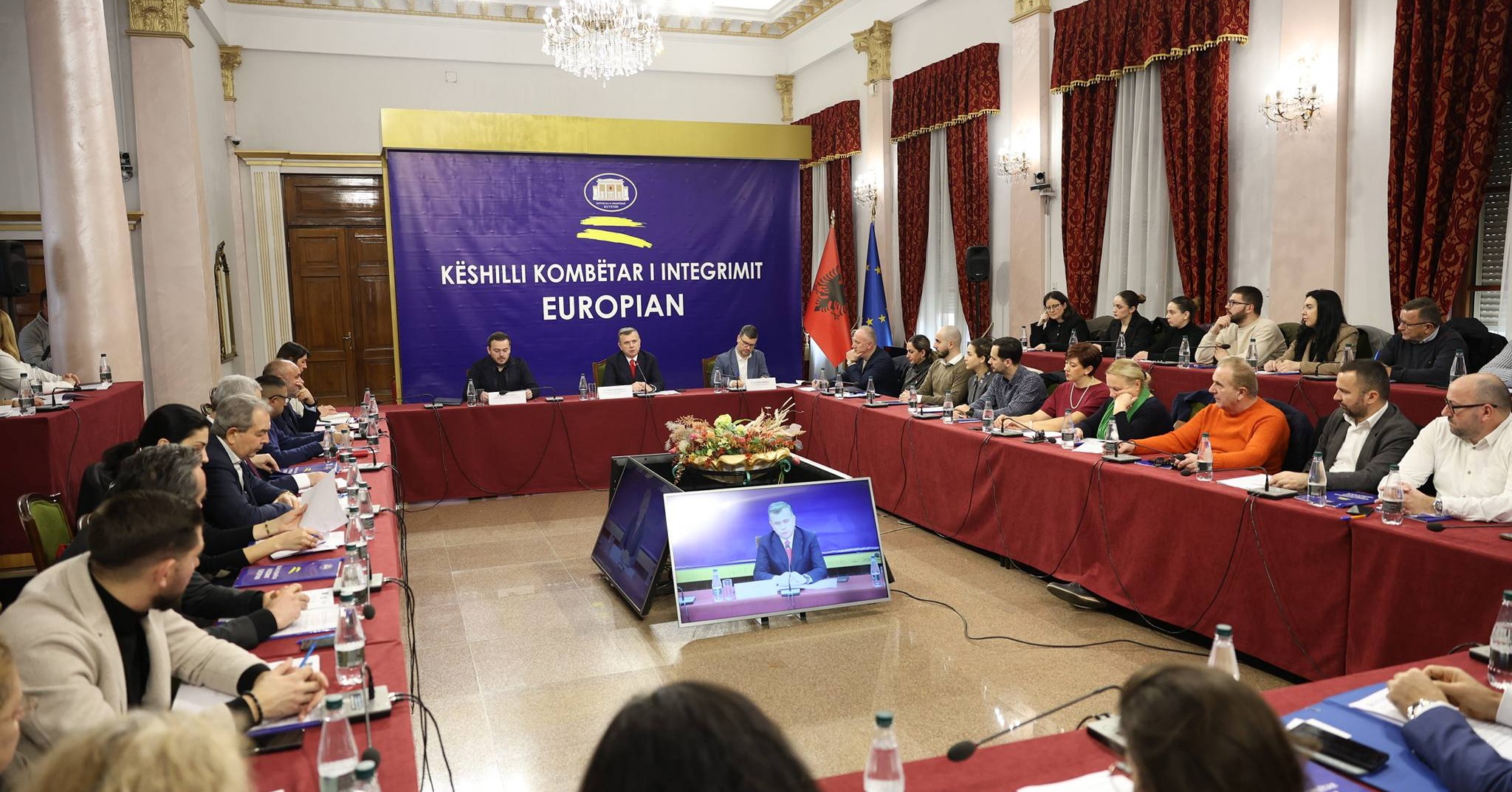 Food safety was the focus of the roundtable held by the European Movement in Albania (EMA), in cooperation with the National Council for European Integration (KKIE), as an important topic with an impact on public health, economy, and public trust, particularly in the context of Albania’s accession to the European Union. This comes at a time when negotiations have already been opened for Cluster 5 – Resources, Agriculture and Cohesion, in which Chapter 12 “Food Safety, Veterinary and Phytosanitary Policy” is included, and where six closing benchmarks have been set to be met by Albanian side in this field.
The meeting was opened by Mr. Gledis Gjipali, Executive Director of the European Movement in Albania (EMA), who emphasized that continuous cooperation between different actors is significant within the negotiation process for Albania’s accession into the EU. He emphasized that this topic has a particular role, as it encompasses extensive legislation and makes the process of alignment with EU standards more challenging. He underlined that this field requires engagement not only of legislative and executive institutions, but also of businesses, agrobusinesses, consumers, and interest organizations, through being informed about harmonized legislation, adapting institutional structures for its implementation, and actively participating as stakeholders, monitors, and contributors throughout the negotiation process.
The meeting continued with remarks by Mr. Taulant Balla, Vice-Chair of the National Council for European Integration, who highlighted that since its establishment, this structure has aimed to bring together both state and non-state actors in decision- making related to Albania’s EU integration process. He assessed civil society as a key actor in identifying challenges and problem areas. He also stated that throughout 2026, the National Council for European Integration is ready to intensify its activities, based on ten years of experience gained since its creation. He described this cluster as particularly challenging due to its technical nature and its direct political, economic, and social impact. He stressed that legislative alignment alone is not sufficient, but that the establishment of an effective and transparent control system is necessary. Referring to the recommendations of the European Commission’s 2025 Report, he emphasized the importance of effective implementation of legislation, strengthening the capacities of control institutions, developing laboratories and ensuring standards at border control points. On the other hand, the Albanian Parliament continues its commitment to fulfilling the benchmarks set by the European Union, including the adoption of 34 by-laws in the first two months of 2026, with over 200 legal acts related to food safety expected to be approved by the end of the parliamentary session. Parliament is also engaged in exercising effective oversight of the implementation of legislation, the functioning of responsible institutions and the transparency of the process. Other concrete measures undertaken include investments through the “EU4FOODSAFETY” and “CRAD” projects.
Mr. Andis Salla, Minister of Agriculture and Rural Development, focused on the current commitments and priorities of the institution he leads regarding this topic. He stated that the focus has been on improving the legal framework, strengthening official controls, increasing institutional capacities and upgrading laboratories and border control points. Among the concrete plans for 2026, he mentioned the adoption of approximately 90 by-laws and 5 implementing acts in the field of food safety, 31 by-laws in the veterinary field and 10 by-laws in the phytosanitary field. He also emphasized the importance of the “EU4FOODSAFETY” project, supported by the European Union and the German government, aimed at improving standards for food business operators and enhancing the quality of raw milk. He noted that risk-based official controls will be strengthened for imported, exported, and domestically produced products and that investments are planned for the construction of seven Border Inspection Posts and further strengthening the institutional capacities of AKU and ISUV, including the construction of seven new laboratories across the country for reporting and certification of all products “from farm to table”. He added that discussions have been held with the European Union regarding the initiation of procedures for exporting food products such as potatoes and eggs, and that the Ministry of Agriculture and Rural Development has established working groups to monitor the export process in case of challenges. At the national level, meetings have been organized with farmers and other stakeholders across all sectors to discuss existing challenges and development opportunities through financial support packages and sovereign guarantees aimed at empowering
farmers.
During the discussions, civil society actors and other participants recommended further reforms and measures to strengthen inspectorates and increase official controls, enhance cooperation and consultation with businesses and small farmers to facilitate adaptation at the lowest possible cost, increase consumer trust in domestic products, implement pilot projects with farmers and raise awareness among all stakeholders within the framework of the EU accession process.
*This roundtable took place within the project “Green line for consumer protection – Food safety and strengthening the protection of consumer rights in Albania through the empowerment of local CSOs”, financed by the European Union (IPA III/2024), which is being implemented by the Alert Center in cooperation with the European Movement in Albania (EMA).
-
 Working Group for Chapter 24 – Strengthening Albania’s Response to Cybercrime and Child Online Protection: Legan Alignmenet and Institutional Capacities, 15 January 2026
Cybercrime and the protection of children online was the topic of the Working Group
Working Group for Chapter 24 – Strengthening Albania’s Response to Cybercrime and Child Online Protection: Legan Alignmenet and Institutional Capacities, 15 January 2026
Cybercrime and the protection of children online was the topic of the Working Group -
 Discussion Forum – The new legal landscape: How are justice, privacy, and public security changing?, 22 December 2025
The discussion forum, organised by the European Movement in Albania (EMA) on 22 December
Discussion Forum – The new legal landscape: How are justice, privacy, and public security changing?, 22 December 2025
The discussion forum, organised by the European Movement in Albania (EMA) on 22 December