


NRC 3 Workshop: The European integration process in Albania – opportunities for the involvement of civil society and youth in the negotiations process for social policies, tourism, education, and youth, Fushë Arrëz, 5 November 2025
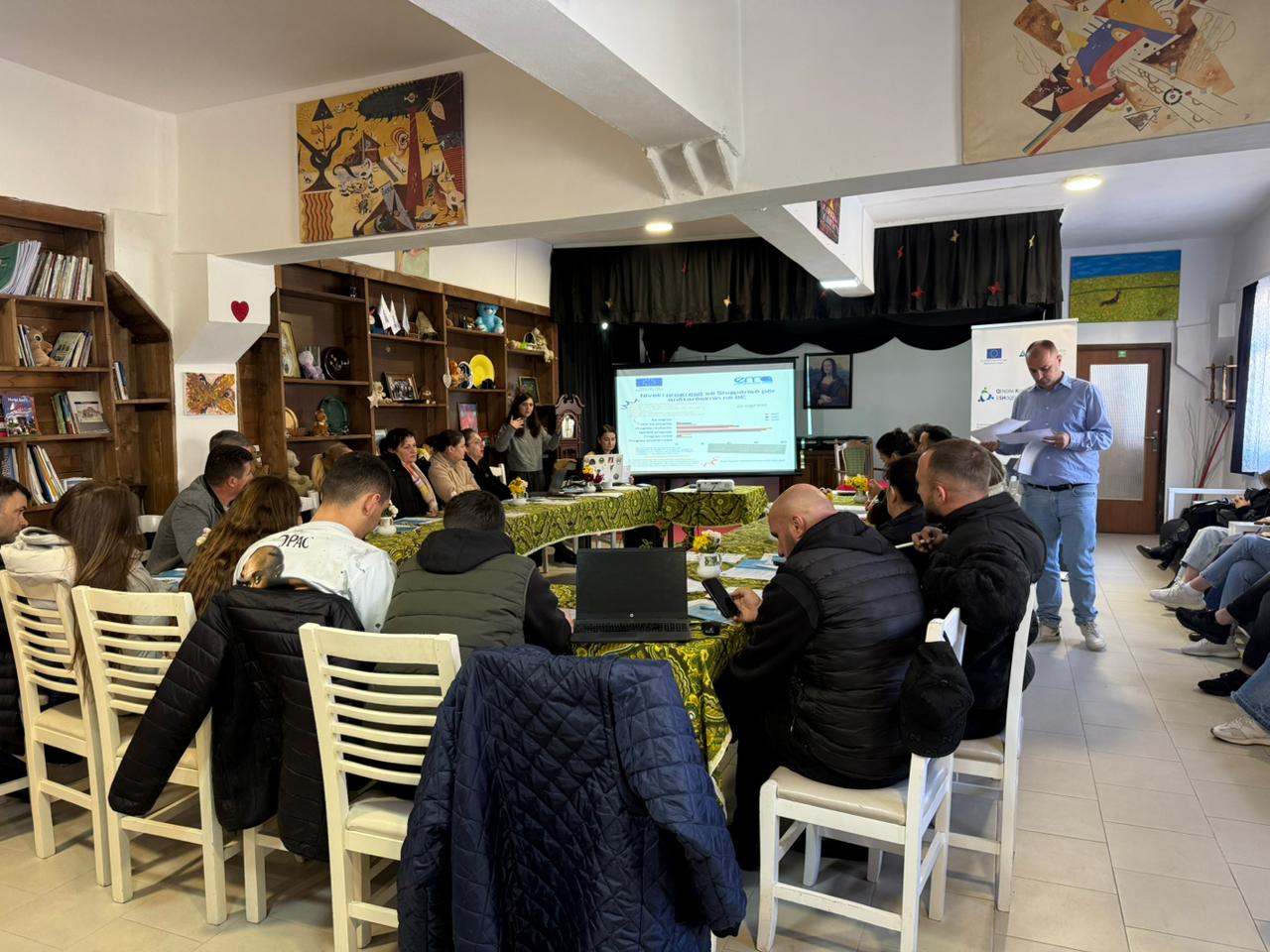 On 5 November 2025, in Fushë Arrëz, a workshop was held as part of the National Resource Centre for Civil Society (NRC), implemented by Partners Albania for Change and Development in cooperation with the European Movement in Albania (EMA). The activity brought together local civil society representatives, community members, and activists to discuss civic engagement, local development, and the European integration process.
The workshop was opened by Xhoana Zeqo, Project Manager at Partners Albania for Change and Development, who focused on the importance of fostering active and informed local CSOs. She emphasized that the goal of this activity is to amplify the voice of local organisations, ensuring that their perspectives and concerns are heard and considered in broader policy discussions. Zeqo highlighted the critical need for local actors to be proactive, engaged, and well-informed to strengthen civic participation in their communities.
Nirvana Deliu, Project Director at the European Movement in Albania, provided an overview of recent developments in Albania’s EU integration process, including the opening and closing of negotiation chapters and clusters. She stressed the importance of extending the dialogue on integration beyond Tirana, engaging local communities in cities like Fushë Arrëz, and making the Partnership Platform for European Integration more accessible to local actors. Nirvana also highlighted the role that CSOs in Tirana and the NRC can play in channeling the complaints and concerns of local NGOs who may not have the capacity to travel to the capital, creating opportunities for hybrid activities and digital engagement to ensure broader participation.
Anila Shehi Dollani, EU affairs expert, focused on youth, tourism, and employment, sharing practical examples and success stories of grants accessed by CSOs in Albania in these areas. She illustrated how local organisations can leverage these opportunities to strengthen their capacities, engage young people, and contribute to the sustainable development of their communities. Shehi emphasized that despite challenges related to limited resources and capacities, local CSOs can achieve tangible results by collaborating, learning from successful initiatives, and taking advantage of available support mechanisms.
The discussion reaffirmed the importance of empowering local actors to contribute to a more inclusive and sustainable European integration process, highlighting the need for increased awareness among citizens about EU requirements, opportunities, and obligations. Participants discussed the value of strengthening cooperation between local and national actors, ensuring that local CSOs are well-informed and can actively participate in shaping policies, monitoring implementation, and contributing to civic and political engagement in their communities.
***
-
 Discussion Forum – The new legal landscape: How are justice, privacy, and public security changing?, 22 December 2025
The discussion forum, organised by the European Movement in Albania (EMA) on 22 December
Discussion Forum – The new legal landscape: How are justice, privacy, and public security changing?, 22 December 2025
The discussion forum, organised by the European Movement in Albania (EMA) on 22 December -
 Discussion Forum – Europe between ideals and identity: Dialogue with youth, 12 December 2025
In the framework of the National Youth Day, commemorated every 8 December, as well
Discussion Forum – Europe between ideals and identity: Dialogue with youth, 12 December 2025
In the framework of the National Youth Day, commemorated every 8 December, as well