


Conference of the National Convention for European Integration 2026, 19 June 2026
 On 19 June 2026, European Movement in Albania (EMA) organised the National Convention for European Integration 2026, dedicated to the key issues related to Chapter 23 and 24, of Albania’s European Union accession negotiations. At the same time the conference served as an opportunity to present the results, achievements and impact of the European Union – funded initiative “Building Partnership on Fundamentals: Empowered CSOs in the EU accession process” implemented during the period 2023 – 2026.
Within this framework, the opening session and the three dedicated thematic panels highlighted the successful cooperation established to date with public instructions and other key stakeholders representing the four main components of the project.
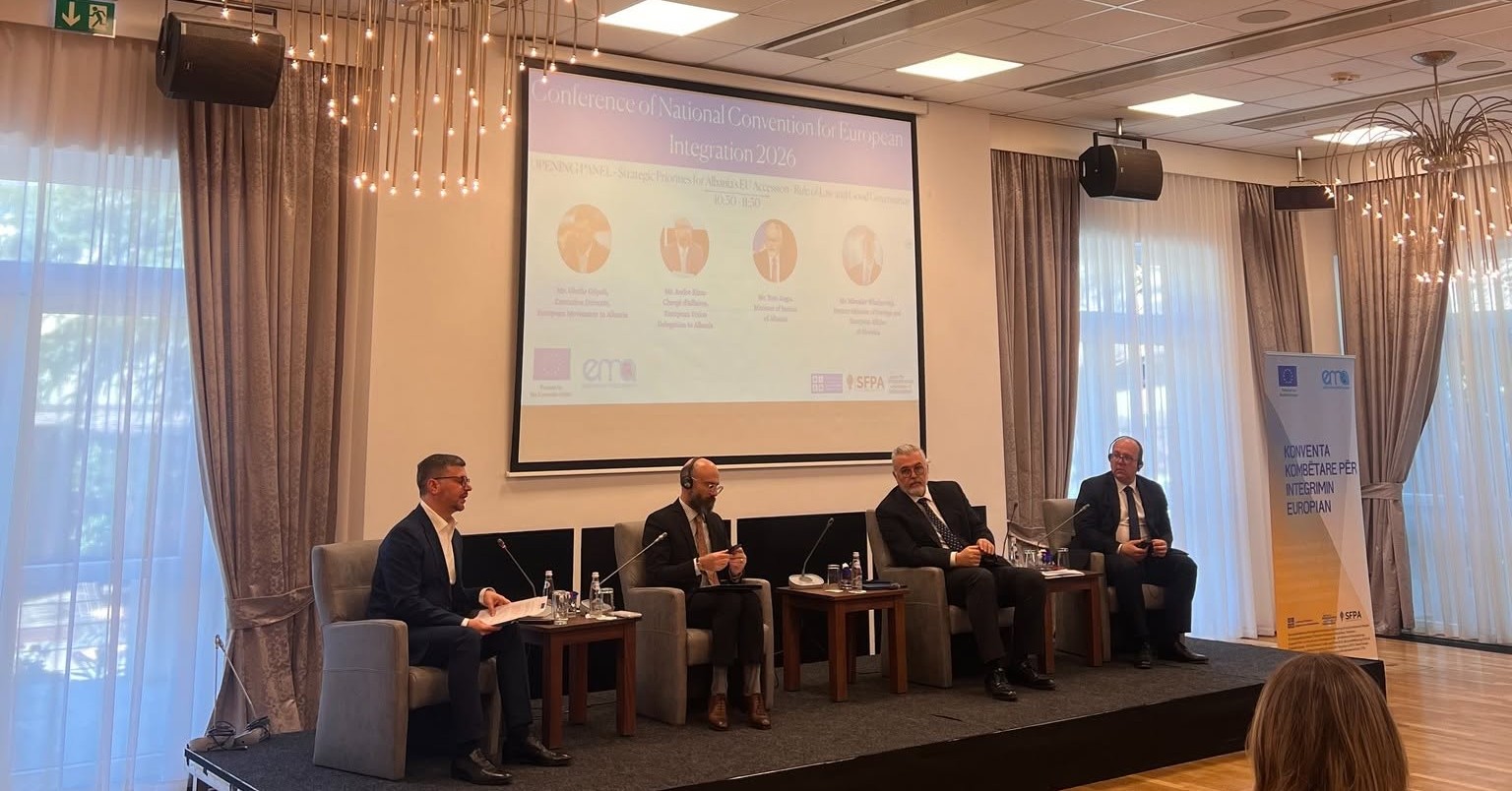 In his opening remarks, Mr. Gledis Gjipali, Executive Director of the European Movement in Albania (EMA), emphasised the importance of building bridges of cooperation and strengthening interaction between the civil society organization, interests groups, and state institutions as the key actors in Albania’s reform and European integration process. He praised the longstanding cooperation with public instructions, particularly the Ministry of Justice and the Ministry of Internal Affairs , underlining that since 2014, within the framework of the National Convention for European Integration, a sustainable partnership has been established, creating greater opportunities for the engagement and contribution of non-state actors in the accession negotiations. In this regard, Mr.Gjipali expressed his particular appreciation to the Ministry of Justice, considering this institution as a positive example of openness and cooperation with civil society. Gjipali also expressed his gratitude to the Delegation of the European Union, not only for supporting this project, but also for its continuous support to the work of civil society organizations throughout the EU accession process – a process that remains complex, highly technical and often challenging. He also thanked the Slovak partners from the Slovak Foreign Policy Association (SFPA) for their support and the provided expertise through the Convention Model, noting that this experience has contributed to improve work practices and introduced European best practices into Albanian’s accession process. Reflecting on the project achievements, Mr.Gjipali highlighted that in cooperations with partners EMA, AIEN, CTFI and SFPA , an integrated approach had been developed combinating, political dialogue, technical expertise, capacity building, monitoring and public outreach. In this context he referred to the organization of 33 roundtables dedicated to the Chapter 23, 24 and 5 as well as the close cooperation with Partnership Platform for European Integration, involving 1,074 practicants, from which including more than 400 representatives of civil society, along representatives of public institutions, academia, the media and other interest groups. Gjipali also underlined the expansion of institutional cooperation within several other key institutions including Public Procurement Agency, the Audiovisual Media Authority, School of Magistrates, the Financial Intelligence Agency, the Security Academy, the State Police, the Commissioner for the Right to Information and the Personal Data Protection and the Commissioner for Protection from the Discrimination, all of which play an important role in implementing reforms and legislation related to EU accession process. Furthermore, he emphasised the project’s capacity-building component, referring to the organization of three editions of the Academy of European Integration and Negotiations (AIEN), attended by around 120 persons involved in 85 lectures. He also highlighted the 16 mentoring sessions and training programmes focused on monitoring reforms and legislation, as well as the monitoring of analytical work carried out by CTFI, to enhance transparency within Albania’s justice institutions. Gjipali further underlined the project’s efforts to strengthen communication with both public and academia, through 20 public information sessions and 17 discussions forums, attended by approximately 1000 participants, in addition with 67 articles were published in the Albania Law Journal and Eurospeak, 18 policy papers, including an expansion on social media with 1300 posts and more than 250,000 informed people. In concluding his speech, Mr Gjipali stressed that these achievements should not be viewed as statistics, rather they demonstrate the strengthened of a broad network of corporation between public institutions, civil society, experts and international partners as well demonstrate that accession process becomes stronger, more credible and more sustainable when it is built with transparency consultation and the meaningful participation of non-state actors.
Mr.Andre Rizzo, Chargé d’Affaires, Delegation of the EU to Albania, noted that Albania has now entered a decisive state of its EU accession process. He referred to the development in Intergovernmental Conference of 26 May 2026, explaining that Albanian’s successful fulfillment of (IBAR) requirements had enabled the EU to adopt its common position and move to negotiations toward the stage of the final benchmarks for Chapters 23 and 24. In this context, he related on the European Union fundamentals principles: the accession process begins with fundamentals and ends with the fundamentals, which makes the rule of law, fundamental rights and the effective functioning of institutions remain non-negotiable required for successfully concluding the accession negotiation. He also underlined that the European Union places great importance on involving civil society not only in candidate countries but throughout the entire European policymaking process, recognising that citizens and organised civil society should actively contribute to the reforms that shape their country’s future. Mr.Rizzo described the National Convention for European Integration as one of Albania’s most important consultation mechanisms. He praised it as the country’s first sustainable and structured platform dedicated to consultation on European integration issues, established more than a decade ago. He highlighted the strong synergy developed between the Convention and the Partnership Platform for European Integration, emphasising their significant contribution to strengthening civil society participation through consultation forums and expert input across various negotiation chapters. In conclusion, Mr Rizzo congratulated the implementing partners on the progress achieved so far and concluded by stressing that European integration is not solely a government project, but a process that requires the active engagement of society as a whole.
Mr. Toni Gogu, Minister of Justice, emphasized the importance of bringing the EU integrating process closer to citizens, noting that people experience and assess the accession process very differently from the highly technical perspective of negotiation. According to him while the accession process is often described in terms of negotiation chapters, technical criteria and benchmarks, the citizens tend to judge it by its tangible impact on their daily lives, such as accession to the justice, the quality of public services, efficacy of the court and the ability of the public institution to respond in time to their needs. He highlighted, as Albania moves closer to EU, the clearer is the need for genuine transparency to take place at the level of everyday institutional practice according to public service delivery, particularly within the justice system. In this context, he brought an example, the justice vetting process, describing it as one of the most comprehensive and far-reaching judicial reforms undertaken in the region. He noted that the reassessment of judges and prosecutors has played a significant role in restoring public confidence in the justice system. The Minister further stressed that reforms should be connected to citizens’ everyday realities rather than remaining confined to the technical commitments of the accession negotiations.He observed that many of the concepts commonly used throughout the European integration process are difficult for the wider public to understand, creating a gap between institutional developments and public perception, so he underlined the need of the reforms to be “translated” into concrete benefits, allowing citizens to clearly understand how these changes improve their daily lives. Mr.Gogu also praised the National Convention for European Integration and the Partnership Platform for European Integration, describing them as valuable mechanisms that enable non-state actors to participate meaningfully in the reform process. He underlined that the role of civil society should extend beyond raising awareness. Civil society organisations should also actively monitor reforms and contribute directly to decision-making processes, ensuring greater transparency, accountability and public participation. In concluding his remarks, the Minister highlighted that justice reforms are not only essential from a democratic perspective but also have a direct impact on the country’s economic development and investment climate.He explained that legal certainty, efficient courts and a well-functioning justice system strengthen investor confidence and contribute to a healthier business environment. Finally, he stressed that EU membership should not be viewed as the end of the journey, but rather as the beginning of a new phase, where success will ultimately be measured by the effective functioning of institutions, a strong culture of accountability and the quality of public services delivered to citizens.
In his address, Mr. Miroslav Wlachovský, former Minister of Foreign and European Affairs of Slovakia, emphasized that the countries of Western Balkans are no longer in margins of European Union, but are an integral part of its future, highlighting the significant progress of Albania in the EU accession process and the opening of all negotiating chapters. He reaffirmed that the accession process remains a priority, strongly supported by countries such as Slovakia which has accompanied Albania in this journey with the model of the National Convention on European Integration. Drawing on the experience of EU Member States, he mentioned the Copenhagen process and Slovakia’s successful accession negotiations to underline that joining the European Union does not mark the end of the process, but rather the beginning of a new phase of responsibility. According to him, the final stage of accession negotiations is often the most demanding because adopting reforms on paper is no longer sufficient. What ultimately matters is whether those reforms deliver tangible results and produce a genuine impact on society. Mr.Wlachovský acknowledged that Albania has undertaken profound reforms in the field of the rule of law, including the comprehensive justice reform, the judicial vetting process, the restructuring of the court system, and the strengthening of mechanisms to combat corruption and organised crime.At the same time, he stressed that important challenges remain. These include increasing public trust in institutions, addressing the backlog of cases within the judiciary, and strengthening institutional capacities to ensure that reforms produce sustainable and measurable results.He went on to argue that the principal challenge is not simply establishing independent institutions, but ensuring that these institutions perform effectively in practice. In his view, the real measure of success lies in citizens’ experience of justice, equality before the law and the effectiveness of anti-corruption efforts. Public confidence can only be strengthened when reforms translate into visible improvements in people’s everyday lives. Mr.Wlachovský also underlined the essential contribution of civil society organisations, academia and other stakeholders through initiatives such as the National Convention on European Integration. He described the Convention as an important mechanism that transforms European integration from a government-led process into a genuine national project, bringing together institutions, experts and citizens around a shared objective. In his concluding remarks, Mr.Wlachovský observed that the closer a country comes to EU membership, the higher the expectations and the greater the scrutiny of its reform efforts, highlighting the need for lasting institutional consolidation and for an accession process supported not only by government institutions but by society as a whole. He expressed his confidence that Albania is moving in the right direction toward becoming part of the European family.
 THEMATIC PANEL 1: Strengthening trust through justice, accountability and transparency
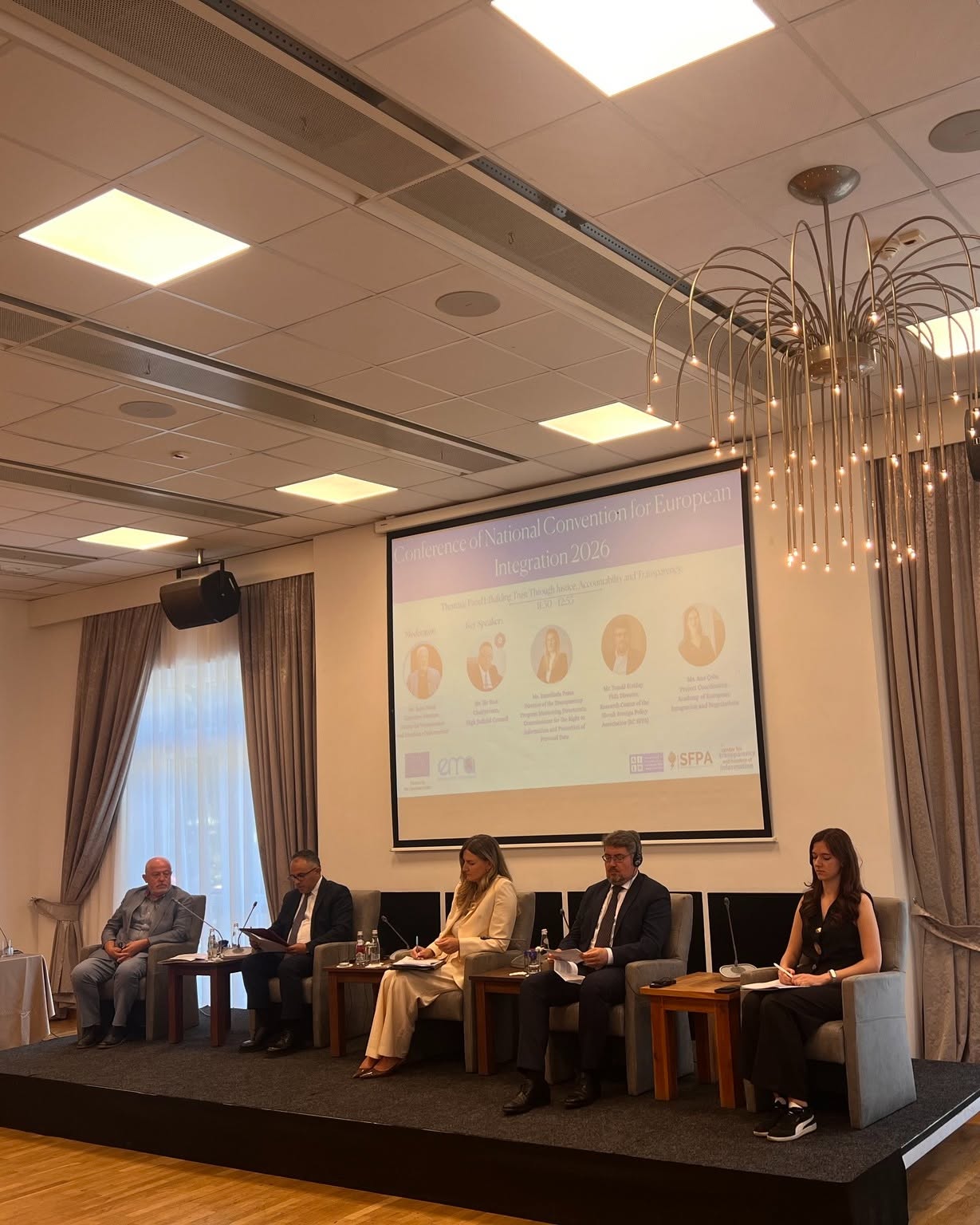
The first thematic panel of the 2026 National Convention for European Integration focused on rule of law reforms, highlighting the role of justice, transparency, and accountability in Albania’s European Union accession process.
As the keynote speaker, Mr. Ilir Rusi, Chair of the High Judicial Council (HJC), emphasized that the judiciary plays a fundamental role in the European integration process, as an independent, impartial, and efficient justice system constitutes one of the main pillars of the rule of law. He underlined that the justice reforms undertaken in recent years have aimed precisely at strengthening these principles, placing the effective functioning of the judiciary at the core of institutional reform and efforts to increase public trust. During his remarks, Mr. Rusi highlighted the role of the High Judicial Council and other independent institutions in safeguarding judicial independence and ensuring the proper exercise of judicial functions. He stressed that transparency is a key component of this process, not only as a legal obligation, but also as an essential tool for improving communication with the public and strengthening institutional accountability. In this regard, he pointed to the importance of financial transparency and the efficient use of public funds. He also praised the cooperation with the National Convention on European Integration, describing it as an important platform for dialogue between public institutions and civil society. Referring to developments in recent years, Mr. Rusi noted that investments and expenditures aimed at improving access to justice have increased. However, significant challenges remain, including managing the courts’ growing caseload and ensuring transparency throughout judicial proceedings. In conclusion, he stressed that judicial independence requires adequate financial and institutional support, while both the legislative and executive branches must contribute to strengthening the judiciary’s capacities. He also emphasized the important role of civil society in promoting accountability and respect for the rule of law. According to him, the effective administration of the judicial system, increased budgetary support, and improved access to justice remain among the key priorities for consolidating the rule of law and advancing Albania’s European integration process.
Mr. Sami Nezaj, Executive Director of the Center for Transparency and Free Information, presented the findings of the budget transparency monitoring component for Albania’s justice institutions. The presentation summarized the results of a comprehensive assessment of the justice sector’s budget, conducted within the framework of an EU-funded project aimed at strengthening the role of civil society in Albania’s European integration process. The monitoring covered 11 justice institutions and examined how the judiciary’s budget is planned, allocated, implemented, and publicly disclosed. The findings show that the judicial budget has increased significantly over the past decade, rising from €26.8 million in 2014 to approximately €68 million in 2026. Despite this substantial increase, the justice system continues to face major challenges, including shortages of judges and administrative staff, a high backlog of unresolved cases, inadequate infrastructure, and unmet investment needs. The analysis revealed that the majority of the judicial budget, approximately 67–70%, is allocated to salaries and social security contributions, while funding for investments and technological development remains relatively limited. At the same time, the High Judicial Council has consistently reported that the actual needs of the justice system considerably exceed the budget approved by Parliament. Although the number of active judges has gradually increased following the justice reform, Albania remains below the European average in terms of the number of judges, prosecutors, and support staff per capita. This is reflected in lengthy court proceedings and the continued accumulation of pending cases. A significant part of the presentation focused on budget transparency and institutional accountability within the justice sector. The monitoring identified improvements in the publication of financial documents but also highlighted persistent shortcomings, including incomplete publication of financial reports, the use of formats that are difficult for the public to access and understand, and the limited involvement of stakeholders in the budget planning process. The presentation also emphasized that the new judicial map has created additional infrastructure needs, particularly in Tirana, Durrës, and the administrative courts, where suitable facilities remain insufficient to ensure the effective functioning of judicial services. In conclusion, the presentation stressed that increased funding for the justice system should be accompanied by greater investment in infrastructure, digital technologies, and human resources, as well as by a more transparent and inclusive budget planning process. Particular emphasis was placed on accelerating the digitalization of the judiciary through the Integrated Case Management Information System (ICMIS), which is expected to improve court efficiency, enhance transparency, and generate significant cost savings. Ultimately, these reforms aim to ensure that increased budgetary allocations translate not only into higher levels of expenditure but also into a faster, more efficient, and more accessible justice system for citizens.
Ms. Ermelinda Pema, Director of the Directorate for Monitoring Transparency Programmes at the Office of the Commissioner for the Right to Information and Personal Data Protection, emphasized the institution’s important role in ensuring transparency and safeguarding personal data protection in Albania. She noted that the institution’s mandate has expanded over the years and that it currently oversees the implementation of five different laws. Referring to the institution’s cooperation with the Academy of Political Studies (ASP) within the framework of the National Convention on European Integration, Ms. Pema highlighted a number of key recommendations that emerged from the Convention’s thematic discussions. Among these, she emphasized the need to develop sector-specific guidelines and awareness-raising campaigns on personal data protection, stressing that the anonymization of personal data requires specialized expertise and advanced technical knowledge. With regard to the right to information, Ms. Pema identified the complexity of the terminology used in the fields of confidentiality and information protection as one of the main challenges. To address this issue, she noted that increasing citizens’ legal awareness has been recommended through clearer explanations of key legal concepts and the use of practical examples. In addition, the Academy of Political Studies has recommended strengthening the capacities of right-to-information coordinators across public institutions. Ms. Pema also announced that, in cooperation with the Albanian School of Public Administration (ASPA), several certified training programmes for right-to-information coordinators and other relevant stakeholders were launched in November 2025, focusing on the implementation and interpretation of the relevant legislation. She further referred to public awareness campaigns conducted in cooperation with the banking sector, as well as the development of practical guidelines on personal data protection for the education, healthcare, and banking sectors. Referring to the third thematic roundtable dedicated to the draft law on lobbying, Ms. Pema outlined several challenges identified during the discussions, including the lack of dedicated financial resources and the need to strengthen institutional capacities to enable the Commissioner to carry out more effective monitoring. In her concluding remarks, Ms. Pema addressed the issue of transparency within the judicial system, emphasizing that Law No. 119/2014 “On the Right to Information” provides the principal legal basis for proactive transparency in public institutions. In this context, she referred to the Transparency Index of public institutions, noting that the High Judicial Council has been awarded a “green traffic light” rating, reflecting its compliance with institutional transparency standards and criteria.
Mr. Tomáš Strážay, Director of the Slovak Foreign Policy Association (SFPA), commended the progress achieved by the National Convention on European Integration in Albania and its contribution to strengthening dialogue between public institutions and citizens. In his remarks, he focused on the role of the European Union and public awareness in shaping and implementing public policies. Mr. Strážay emphasized that one of the key challenges lies in how the European integration process has been communicated to citizens. According to him, the process faces both internal and external challenges. In this context, he referred to the influence of external actors, such as Russia and China, which, in his view, have an interest in undermining the cohesion and unity of the European Union. Drawing on a publication by the Slovak Foreign Policy Association, Mr. Strážay identified three key elements for improving communication on the European integration process. First, he highlighted the need to enhance the dissemination of information to citizens by presenting the European Union as a community founded on shared values and solidarity. Second, he stressed the importance of increasing citizens’ participation and improving their access to decision-making processes. Third, he emphasized the need to strengthen institutional confidence in openly identifying and addressing actors that seek to undermine the European perspective. In his concluding remarks, Mr. Strážay underlined that public communication should not focus solely on the challenges and obstacles associated with the EU integration process, but should also highlight the European Union’s success stories. According to him, the EU remains one of the world’s most successful models of political and economic cooperation. However, many of these achievements are not communicated effectively and therefore fail to be fully recognized and appreciated by the wider public.
Ms. Ana Çoba, Project Coordinator at the Academy of European Integration and Negotiations (AIEN), presented the main achievements of the Rule of Law Academy, implemented within the framework of the European Union-funded project. She explained that three editions of the Academy were successfully organized during the project, establishing it as a flagship professional capacity-building programme on the rule of law, European integration, and Albania’s EU accession process. Designed as a multidisciplinary and practice-oriented initiative, the Rule of Law Academy brings together representatives of civil society organizations, public institutions, academia, the media, and the private sector, providing a platform for learning, dialogue, and professional networking. Throughout its three editions (2023–2026), the Academy has become an important forum for promoting informed engagement in rule of law reforms and Albania’s European integration agenda. Presenting the programme’s results, Ms. Çoba highlighted that over the past three years the Academy has built a sustainable network of 121 alumni, while 130 participants were selected through a competitive application process. The programme delivered more than 135 expert-led sessions and over 150 hours of training, supported by 85 lecturers and trainers from Albania and abroad. Across its three editions, the Academy addressed a wide range of topics related to the rule of law and European integration, including Albania–EU accession negotiations, justice reform, anti-corruption policies, fundamental rights, digitalization, access to European Union funding, and environmental governance. In addition to classroom sessions, AIEN organized study visits to key national institutions, including the High Inspector of Justice and the National Council for European Integration, providing participants with practical insights into Albania’s institutional framework. Ms. Çoba also noted that the Academy has attracted participants from civil society organizations, public administration, academia, and the private sector. With women representing 79.2% of participants, the programme has actively promoted gender inclusion while strengthening professional capacities, fostering cross-sectoral cooperation, and supporting Albania’s European integration process and governance reforms.
 THEMATIC PANEL 2: Fighting corruption and the protection of fundamental rights
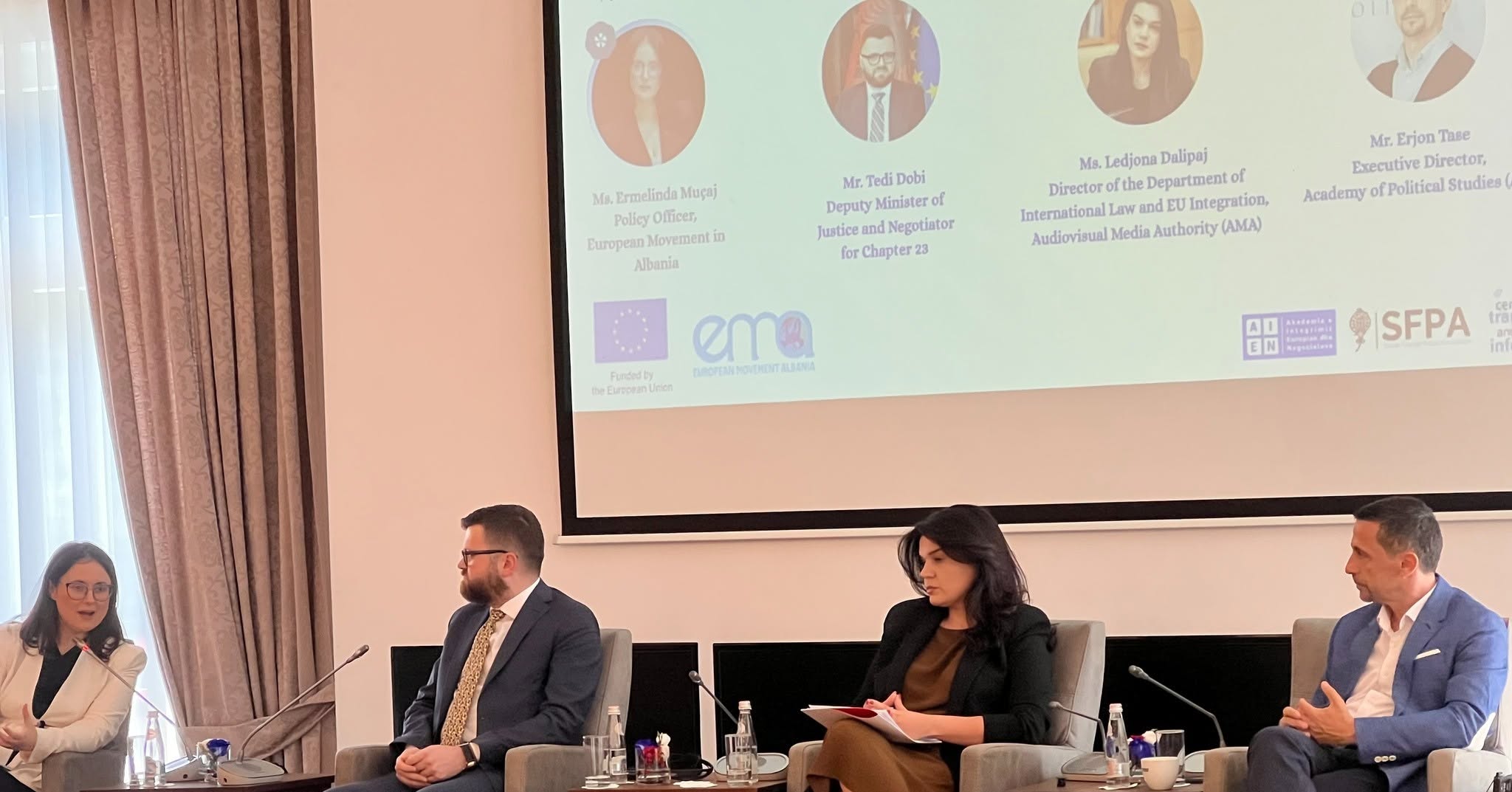
The second thematic panel focused on the protection of fundamental rights within the framework of Chapter 23 – Judiciary and Fundamental Rights, as well as the key reforms required to advance Albania’s European integration process.
Ms. Ermelinda Muçaj, Project Officer at the European Movement in Albania (EMA), highlighted that, within the framework of the National Convention for European Integration, a total of 16 thematic roundtables dedicated to Chapter 23 were organized during the 2023–2026 period with the support of the European Union. She noted that while Chapter 23 has been part of the Convention’s work since 2014, institutional participation has expanded significantly in recent years. Ms. Muçaj emphasized that cooperation has extended beyond the Ministry of Justice to include several independent institutions, such as the Commissioner for the Right to Information and Personal Data Protection, the Commissioner for Protection from Discrimination, the Audiovisual Media Authority, and the People’s Advocate. She also underlined that the Convention has broadened its stakeholder engagement by bringing together not only civil society organizations but also representatives from the media, academia, business associations, trade unions, and other relevant actors, fostering a more inclusive and participatory dialogue on reforms under Chapter 23.
Mr. Tedi Dobi, Deputy Minister of Justice and Negotiator for Chapter 23, emphasized the importance of fulfilling the interim benchmarks for this chapter, which were successfully completed during the Eighth EU–Albania Intergovernmental Conference held on 22 May 2026. He underlined that this milestone represents a significant achievement, as it demonstrates Albania’s compliance with the required standards and reflects the country’s progress compared to other countries in the region. Mr. Dobi noted that the implementation of Chapter 23 reforms involves 73 institutions and 208 institutional representatives. Considering that several countries in the region began the negotiation process earlier, achieving these objectives represents an important accomplishment for Albania. However, he stressed that the main challenge remains maintaining the pace of reforms, with the objective of ensuring that Albania is prepared for the closure of negotiation chapters by the end of 2027. Alongside maintaining the pace of reforms, he highlighted the importance of preserving the standards already achieved. Currently, 14 closing benchmarks have been established for Chapter 23, together with a horizontal benchmark related to monitoring the Roadmap on the Functioning of Democratic Institutions. Mr. Dobi emphasized that one of the most significant areas covered by the chapter is the fight against corruption, which is closely linked to the effective functioning of the judicial system and the performance of justice institutions. Regarding the protection of fundamental rights, Mr. Dobi highlighted the importance of ensuring a functional and balanced justice system. Among the positive developments in this area, he referred to the decriminalization of defamation, which is no longer considered a criminal offence, as well as the adoption of legislative amendments concerning audiovisual media aimed at increasing transparency of media ownership. He also referred to the establishment of the Open Media Dialogue Platform, designed as a mechanism for dialogue between Albanian institutions and media stakeholders, as well as measures undertaken to strengthen the safety and protection of journalists.
Ms. Ledjona Dalipaj, Director of the Department for International Law and European Integration at the Audiovisual Media Authority (AMA), initially focused on the issue of media ownership transparency. She explained that the regulation on the publication of beneficial owners has been in force since April 2024, in line with European standards. AMA has established and published on its official website a transparent and accessible database containing information on the direct and indirect owners of audio and audiovisual media outlets, ultimate beneficial owners, as well as licensed and authorized entities operating in the audiovisual sector. In cooperation with the National Business Center (NBC), AMA has carried out the verification of beneficial ownership data, ensuring the accuracy and transparency of the published information. In this regard, the signing of a cooperation memorandum with the NBC was highlighted as an important institutional step towards strengthening transparency in media ownership. Ms. Dalipaj also noted that work has commenced on the process of transposing and implementing Regulation (EU) 2024/1083 – the European Media Freedom Act (EMFA). Discussions focused on the implementation deadlines of the EMFA, the rights and obligations of media service providers, the role of independent regulatory authorities, the functioning of the media market, and issues related to media concentration. It was emphasized that the EMFA represents a cornerstone for safeguarding media pluralism, freedom of expression, and citizens’ access to reliable information. Another key priority highlighted by Ms. Dalipaj was media literacy. In this context, awareness-raising campaigns have been developed for preschool children, aiming to increase their understanding of media and audiovisual content. She also stressed the importance of co-regulatory mechanisms within the media sector. The discussions further addressed Albania’s alignment process with the European Union’s Digital Services Act (DSA), with particular focus on protecting fundamental rights in the online environment, safeguarding freedom of expression, protecting minors, and combating illegal online content. In this framework, the relevant draft legislation for the transposition of the DSA has been prepared, with concrete steps foreseen for its implementation by 2027.
Mr. Erjon Tase, Executive Director of the Academy of Political Studies (ASP), emphasized that, as Albania advances towards European Union membership, the integration process should go beyond legislative alignment and the fulfilment of technical criteria. According to him, European integration is a transformative process that requires the engagement and preparation of all segments of society to ensure that reforms are sustainable and broadly supported. Mr. Tase underlined that the involvement of the private sector, chambers of commerce, civil society organizations, media, academia, and other stakeholder groups is essential to ensure an inclusive process with a tangible impact on citizens’ lives. In this context, he stressed that each of these actors must be prepared for the changes associated with EU membership by understanding the benefits, standards, obligations, and responsibilities deriving from the implementation of the EU acquis. He highlighted that preparing the private sector, strengthening institutional capacities, and increasing public awareness are key elements for a successful integration process. Mr. Tase also emphasized the importance of enhancing public communication on European integration through continuous information-sharing, dialogue with stakeholders, and the creation of opportunities for citizens’ active participation. According to Mr. Tase, only a transparent, inclusive, and publicly understood integration process can secure the necessary support for reforms and accelerate Albania’s path towards European Union membership.
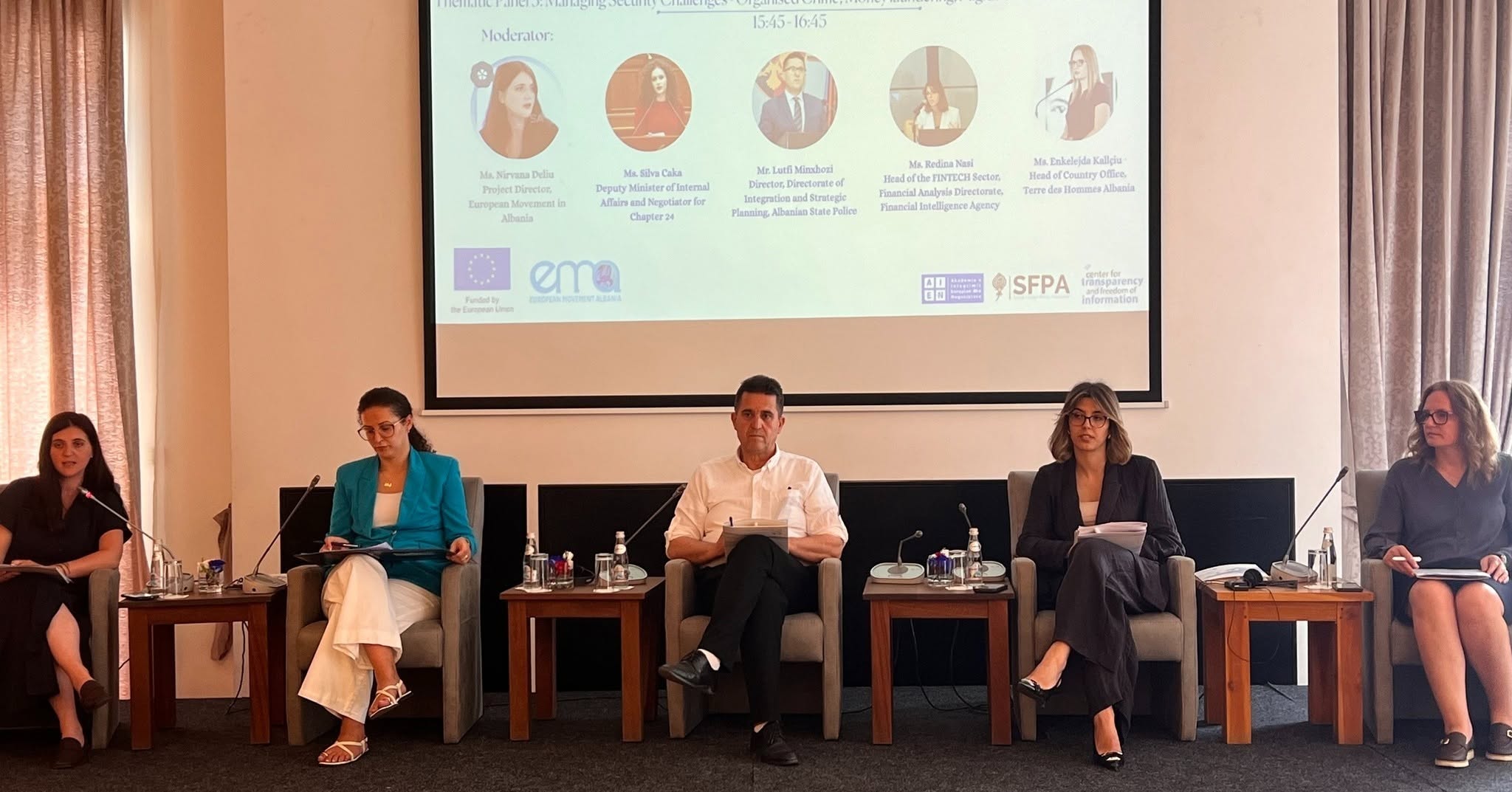 THEMATIC PANEL 3: Managing security challenges – Organised Crime, Money Laundering, Migration and Border Control
Ms. Nirvana Deliu, Director of Projects at the European Movement in Albania (EMA), opened the final thematic session dedicated to Chapter 24 – Justice, Freedom and Security, presenting the work carried out within the framework of the National Convention for European Integration and the Chapter 24 Working Group.
She highlighted that the working group was established in 2014 and serves as a platform for dialogue between public institutions and non-state actors. During the period 2023–2026, the group organized 10 thematic roundtables with more than 360 participants, including representatives from public institutions, civil society organizations, international organizations, diplomatic missions, media, and the private sector. Ms. Deliu also emphasized the close cooperation established with key institutions, including the Ministry of Interior, the State Police, the Financial Intelligence Agency, and the Security Academy, as well as the implementation of mentoring sessions aimed at strengthening stakeholder engagement and institutional capacities. She further outlined the main areas addressed during this period, including the fight against organized crime, money laundering and terrorist financing, migration and border management, asset recovery, cybercrime, online child protection, police cooperation, and the strengthening of law enforcement capacities. In this context, Ms. Deliu highlighted that the activities implemented within the framework of the Convention resulted in the development of 131 recommendations, focusing on improving legislation, strengthening institutional capacities, enhancing inter-institutional coordination, and increasing the involvement of non-state actors in reform processes. Concluding her remarks, Ms. Deliu stressed that the discussions and recommendations generated in recent years have contributed to the broader dialogue on priorities identified in the European Commission Progress Reports, Rule of Law Reports, and the benchmarks related to Chapter 24. She noted that, while Albania has achieved progress and fulfilled the interim benchmarks for this chapter, the current phase remains particularly challenging, as it requires not only the adoption of reforms but also the achievement of sustainable results and the fulfilment of closing benchmarks. For this reason, she emphasized that the thematic session represents an important opportunity for reflection on achievements, remaining challenges, and future priorities within Albania’s European integration process.
Ms. Silva Caka, Deputy Minister of Internal Affairs, presented a comprehensive overview of developments under Chapter 24 – Justice, Freedom and Security, emphasizing that the final deadline for fulfilling the closing benchmarks is set for the end of 2027. She informed that Albania has already achieved the 14 interim benchmarks, which represent important steps in the process of aligning with the European Union acquis. Ms. Caka highlighted that one of the most important elements of this process has been the involvement of civil society and other non-state actors, ensuring an inclusive consultation process and incorporating their contributions on both thematic and technical matters. According to her, despite existing challenges, this approach has contributed to increasing the transparency and quality of the reform process. She noted that the transition from interim benchmarks to closing benchmarks represents a new phase in the negotiation process, where the focus shifts from formal alignment towards the practical implementation, measurement of impact, and effectiveness of reforms. However, she acknowledged that impact assessment remains challenging due to logistical and technical limitations, as well as difficulties related to institutional coordination and administrative capacities. Ms. Caka further presented key developments across the main areas covered by Chapter 24. Regarding the fight against organized crime, she highlighted the preparation of the new strategy against organized crime, emphasizing the importance of strengthening inter-institutional cooperation and reviewing indicators and measures to ensure more accurate monitoring of implementation. She also underlined the importance of establishing a solid track record, focusing on tangible and measurable results and ensuring that comments and recommendations received during consultations are properly reflected. With regard to combating trafficking in human beings, Ms. Caka emphasized the importance of involving civil society organizations and experts in implementing the relevant strategy. She welcomed their recommendations and contributions, particularly from organizations working directly with affected communities, which can provide valuable statistical data and practical insights for a better understanding of the situation on the ground. Regarding the fight against drugs, she informed participants about the establishment of the National Drug Observatory and the Early Warning System within the State Police, describing them as important institutional developments in this area. In the field of migration and border management, Ms. Caka highlighted the need for further improvements to the cross-sectoral strategy and its action plan, particularly concerning return procedures and the strengthening of bilateral agreements with countries of origin on readmission and repatriation. Finally, addressing terrorism and violent extremism, Ms. Caka stressed that important measures have been undertaken to prevent and mitigate these phenomena, including through the implementation of the regional roadmap for the Western Balkans. She noted that cases in Albania remain limited and that, so far, they have been successfully managed by the relevant authorities.
Mr. Lutfi Minxhozi, First-Level Director at the Directorate of Integration and Strategic Planning, State Police of Albania, highlighted the importance of Chapter 24 – Justice, Freedom and Security in the European integration process, emphasizing that the fight against organized crime and money laundering remains a key priority and an essential component of strengthening the rule of law and public security. He underlined that the integration process has served not only to identify existing challenges but also to guide reforms towards strengthening institutional capacities and improving practical implementation. According to Mr. Minxhozi, organized crime today operates in increasingly sophisticated ways, using advanced technologies, complex financial networks, and new methods for concealing criminal assets. This requires a more integrated approach focused on financial investigations, tracing, and the confiscation of criminal assets. In this context, he positively assessed the increased use of financial investigations in Albania, the adoption of national strategies in this field, and the development of practical instruments aimed at strengthening investigative capacities. Mr. Minxhozi also addressed the establishment of the Asset Recovery Office (ARO), describing it as an important step towards alignment with European standards. He emphasized, however, that its effectiveness will depend on strengthening professional capacities, ensuring access to relevant data, enhancing inter-institutional cooperation, and increasing participation in European networks. Mr. Minxhozi further highlighted that the State Police is facing new challenges related to cybercrime and online child exploitation, areas in which investigative and preventive capacities, as well as international cooperation, have been strengthened. Nevertheless, he noted that further investments remain necessary in technology, human resources, and institutional coordination to effectively address these evolving threats. He also stressed the importance of further intensifying cooperation with European agencies and mechanisms such as Europol and EMPACT, acknowledging Albania’s participation in joint operations while emphasizing the need to enhance analytical, technological, and professional capacities to ensure more effective engagement within the European security architecture. In conclusion, Mr. Minxhozi emphasized that the European integration process represents a profound institutional transformation that goes beyond legal approximation. According to him, it aims to strengthen institutional capacities, modernize law enforcement structures, and increase citizens’ trust through concrete results in combating organized crime and other forms of criminality.
Ms. Redina Nasi, Head of the FINTECH Sector at the Financial Analysis Directorate of the Financial Intelligence Agency, addressed the emerging challenges related to combating money laundering, emphasizing that this phenomenon is becoming increasingly complex due to technological developments and the use of new financial instruments. She highlighted that the inter-institutional working group on anti-money laundering represents an important mechanism for strengthening cooperation among public institutions, as well as public-private cooperation, which remains essential for identifying and addressing risks in this area. According to Ms. Nasi, the use of virtual assets, fintech solutions, and advanced technologies is making financial crimes more sophisticated and increasingly difficult to detect and investigate, requiring a tailored institutional response. In this context, she noted that, although Albania has made progress in aligning its anti-money laundering legislation with European standards, this process must be accompanied by strengthened institutional and professional capacities. In particular, she emphasized the need for continuous training of the staff of the Financial Intelligence Agency, as well as the development of stronger capacities to investigate crimes involving virtual assets and new forms of financial and cyber fraud. Ms. Nasi stressed that addressing these challenges requires not only specialized expertise but also improvements in the technological infrastructure and tools used by responsible institutions. She further highlighted the importance of raising awareness and providing practical guidance to different stakeholders who may be exposed to these risks. In this regard, she underlined the need to develop practical guidance materials and awareness tools on preventing financial and cyber fraud, targeting not only individuals but also the banking sector and the business community. According to Ms. Nasi, these actors remain among the most important links in preventing, identifying, and reporting suspected cases of money laundering and related financial crimes.
Ms. Enkelejda Kallçiu, Head of the National Office of Terre des Hommes in Albania, addressed the role of civil society organizations in tackling security-related challenges, protecting vulnerable groups, and preventing phenomena such as trafficking, violence against women and children, as well as extremism and radicalization. She emphasized that the organization she represents holds a unique position, as it works directly with communities and vulnerable groups on the ground while also maintaining close cooperation with public institutions by providing support in strengthening technical and institutional capacities. According to Ms. Kallçiu, this dual approach makes the work of civil society organizations particularly valuable in identifying concrete challenges and supporting institutional responses. In her remarks, Ms. Kallçiu highlighted that one of the main challenges faced by non-governmental organizations is that the impact of their interventions is rarely immediate or easily measurable in the short term. However, she stressed that the focus of such work should not be limited to technical efficiency, but rather to ensuring citizens’ well-being and addressing their real needs. In this regard, she noted that organizations working directly with communities have the advantage of maintaining close contact with marginalized and vulnerable groups, allowing them to better understand specific challenges and design more tailored interventions. An important point raised by Ms. Kallçiu was the need to ensure that communities are heard and actively involved throughout all stages of addressing social challenges, from prevention and protection to reintegration. According to her, the participation of affected communities and vulnerable groups should not be merely formal, but should represent an essential element in developing policies and measures that deliver meaningful results. She further emphasized that interventions addressing issues such as trafficking, violence against women and children, extremism, and radicalization cannot be effective if they remain ad hoc, fragmented, or limited to specific areas. Instead, they require sustainable, continuous, and long-term approaches supported by coordinated action. Ms. Kallçiu underlined the importance of combining institutional capacities and mechanisms with the experience and community-based approach of civil society organizations. According to her, such cooperation enables more effective interventions, as institutions provide formal authority and instruments, while civil society organizations facilitate engagement with communities, build trust, and ensure the direct involvement of vulnerable groups. In this context, she identified information-sharing and awareness-raising as essential components, emphasizing the need for all relevant actors, including institutions, communities, organizations, and target groups—to have access to the necessary information and awareness regarding risks, protection mechanisms, and available support opportunities. In conclusion, Ms. Kallçiu highlighted the importance of exchanging international best practices and strengthening cross-sectoral cooperation as key elements for developing more comprehensive, sustainable, and effective approaches to addressing challenges affecting the most vulnerable groups in society.
*This conference took place within the framework of the “Building Partnership on Fundamentals: Empowered CSOs in the EU accession process” project, with the financial support of the European Union – IPA Civil Society Facility 2021, which is implemented by the European Movement in Albania and in cooperation with the Academy of European Integration and Negotiations (AIEN), Slovak Foreign Policy Association (SFPA) and the Center for Transparency and Freedom of Information (CTFI).
-
 Working Group for Chapter 5 – Public Procurement: Update on the current status of meeting the closing benchmarks and the use of Artificial Intelligence (AI) in the public procurement system, 18 June 2026
The European Movement in Albania (EMA), in cooperation with the Public Procurement Agency, organised
Working Group for Chapter 5 – Public Procurement: Update on the current status of meeting the closing benchmarks and the use of Artificial Intelligence (AI) in the public procurement system, 18 June 2026
The European Movement in Albania (EMA), in cooperation with the Public Procurement Agency, organised -
 Working Group for Chapter 23 – Improving the Business Climate: Legal Certainty, Property Rights, and the Perspective of the Business Community in the Framework of Chapter 23, June 15, 2026
Following the endorsement of the IBAR for Chapters 23 and 24, work continues steadily
Working Group for Chapter 23 – Improving the Business Climate: Legal Certainty, Property Rights, and the Perspective of the Business Community in the Framework of Chapter 23, June 15, 2026
Following the endorsement of the IBAR for Chapters 23 and 24, work continues steadily