


NCEI 2021-2023, WG II (Chapter 24): The fight against cybercrime in Albania – New challenges in the framework of the Integration process, 08 February 2023
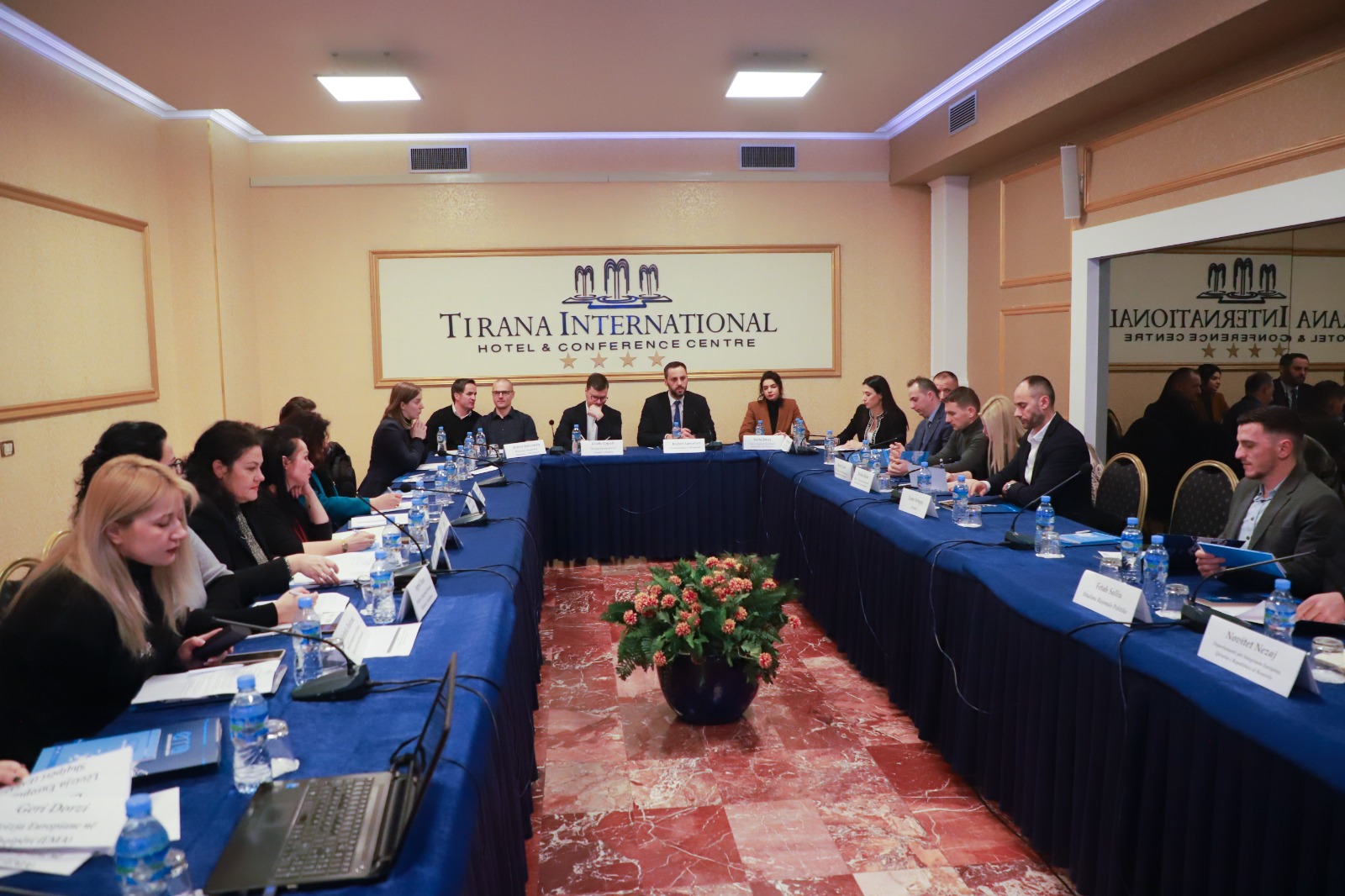 On February 8, 2023, the discussion table for Chapter 24 was held in Tirana, on the topic “The fight against cybercrime in Albania – New challenges in the framework of the Integration process”. This activity was organized by the Ministry of the Interior and the European Movement in Albania (EMA), within the framework of the Partnership Platform for European Integration (PPEI) and the National Convention for European Integration (NCEI). Among the activity attendees were representatives from state institutions such as the Ministry of the Interior and the State Police, as well as members of the Chapter 24 Discussion and Consultation Table of PPEI, from civil society, universities and the private sector.
Mr. Besfort Lamallari, Deputy Minister of the Interior welcomed the activity and its importance in combining the synergy that is required for a process of the highest quality in the framework of the EU negotiations and integration, that officially started on July 19th last year. Chapter 24 remains a key chapter of Cluster 1 and for other chapters as well, as it is directly related to the rule of law and law enforcement. Therefore, Chapter 24, together with Chapter 23, will be the first to open and last to close. The Ministry of the Interior is the leading institution for this chapter, and together with about 70 institutions that are part of GNPIE, are working to fulfill the requirements and obligations, by also contributing during the screening process for this chapter. These institutions were actively involved during the explanatory meeting, and on the bilateral meeting of November 8-9-10, where the achievements, implemented measures and future plans regarding the legal and administrative capacity frameworks were presented. Mr. Lamallari said that for the opening of the negotiations for Cluster 1 we await the publishing of the Screening Report for all chapters by the European Commission during February – March 2023, which will then be forwarded to the Council of the EU, while its approval is planned in the months of April-June 2023. In the meantime, the opening benchmarks for chapter 24 can become apparent from this document. He stated that these meetings carried out by the Ministry of the Interior in the framework of the Partnership Platform for European Integration, are necessary to share the responsibilities and tasks that different actors have in this process, as well as to better understand the integration process. This PPEI table focuses on the fight against cybercrime, chosen not by chance, but because in July 2022 our country was the victim of a cyber-attack on its online infrastructure, where the state police was also affected. This brought out the problems in this sector, such as the need for more investments, budget increase, but also a strengthening of the capacities of the staff and the need for a reorganization of the structure. He expressed as the Chairman of the Working Group for the Reorganization of the criminal police structure that this sector will turn to the directorate, where it will not be only in the center, but it is planned to have units in the other districts, in order to increase standards and services throughout the whole country.
Mr. Gledis Gjipali, Executive Director of EMA, spoke about the importance and benefits of such activities, which by bringing together interest groups promote cooperation with experts in the field, making the integration process more fruitful. EMA’s goal is to bring together national experts at these tables with international partners, who bring their practical experiences to facilitate and accelerate Albania’s EU integration process. Mr. Gjipali emphasized that cybercrime is a relatively new field, but special attention should be paid to it, to bring tangible results and success in facing the challenges forward. Therefore, it is essential to complete the legal framework, create and follow with a strategic plan to help and strengthen the structures at central and local level.
Ms. Suela Bonjaku, Specialist in the Computer Crime Investigation Sector, Criminal Police Department, presented the Albanian legal framework in this field, its implementation and the current situation in the country. She made an analysis of the Albanian legislation which is now further aligned with the European law and the ratified international treaties, as well as the institutional changes. For example, she mentioned the 24/7 point, set up in accordance with the Budapest Convention, as well as the contact points for the progress of cooperation and coordination with Europol and Interpol. Ms. Bonjaku also pinpointed some areas Albania needs to improve, also according to the recommendations of the European Commission. The cybercrime sector needs an increase in administrative capacities and infrastructure to continue delivering positive results, especially in the most challenging areas such as preventing cyberattacks on public administration or stopping the phenomenon of sexual abuse of children on the internet. In order to address the shortfalls and better coordinate the work on the fight against cybercrime, the National Cybercrime Investigation Strategy in Albania 2021-2025 and the Action Plan 2021-2025, have been approved, divided into 4 main pillars and specific objectives. The achievement of these objectives will be guaranteed through the increase of financial capacities, administrative infrastructures, professional staff and the strengthening of legal means to ensure enforcement. Ms. Bonjaku listed some of the future steps such as, the extension of investigative structures throughout whole country, acquiring new technological tools and software, the increase of human resources and their training with the latest of investigation and prevention techniques, as well as raising awareness among the public. Very important in this sector is also the cooperation with international partners. In conclusion, Ms. Bonjaku presented an overview of the sector’s statistics for 2022, in comparison with 2021, the most frequent criminal offenses, highlighting the ongoing work of the department to investigate cybercrime and listing some of the successful operations.
Mr. Robert Bohunicky, Expert in the Bureau of Criminal Police, in the Ministry of the Interior of Slovakia, gave a presentation on the current legislative and institutional structures in Slovakia, whilst also providing some practical advice for Albania on how to improve and strengthen the sector in the fight against cybercrime. For Slovakia the reorganization first in 2013 and in 2022 was followed by the establishment of the separate department for cybercrime considered as a crucial turning point, in addition to creating a separate network infrastructure. The expert emphasized the need for the police staff and the experts in the field of cybercrime to increase in numbers to effectively manage the workload. Therefore, in Slovakia there are ongoing talks with the Ministry of the Interior to address this issue. The fight against cybercrime is extremely challenging, this in part to the noticeable increased cybercrime rates of recent times, especially after the momentum gained during the Covid-19 pandemic. But also due to the dynamic nature of technology, the modus operandi of individuals involved in these activities changes frequently, making them more difficult to apprehend. The need for the increase of human resources is closely related to the wide range of responsibilities of the Cybercrime Unit. These include not only operational and investigative activities, but also creating protocols for investigating cybercrimes, internal rule and guidelines, training and assisting other police units when dealing with cybercrimes, cooperation with international agencies and platforms. The Cybercrime Unit in Slovakia is divided into two sectors, in order to organize and divide responsibilities more effectively. The Slovak expert emphasized the importance of close cooperation with international agencies, neighboring countries and effective participation in joint platforms. For example, he mentioned EMPACT, a European platform instrumental for multidisciplinary and multiagency operational cooperation, with which they have had a fruitful cooperation. In addition, the Slovak forces cooperate with the private sector in the fight against cybercrime, which, thanks to the technologies they possess, provide operational information on current threats in the country such as viruses, malware, e-mail phishing, etc. Finally, Mr. Bohunicky also expressed the need for raising public awareness regarding the dangers of cybercrime, especially among children and minors. He also shared some good practices that Slovakia has undertaken in this regard.
Ms. Suela Jahaj, Director in the Directorate of Integration, Coordination, Agreements and Assistance of Ministry of Interior, moderated the discussion among the members of the table, answering questions and welcoming suggestions. During the discussion several concerns were addressed such as, the need for a more detailed legal analysis of Albania for the purpose of EU alignment, how the responsible institutions have handled the frequent staff movements in the State Police, the Ministry’s efforts in creating training programs for police officers and attracting more cybercrime specialists. Ms. Jahaj emphasized that the partnership platform is a step in the right direction. Chapters 23 and 24 of the EU acquis are crucial in the EU integration process and come with a voluminous workload. Therefore, the cooperation of all actors and experts will help to create a roadmap with practical steps to achieve an effective process.
-
 Working Group on Chapter 23 – Digital Services in Albania within the framework of the accession negotiations – DSA Governance, Fundamental Rights, and Institutional Coordination, 30 June 2026
Gledis Gjipali, Executive Director of the European Movement in Albania (EMA), emphasised the importance
Working Group on Chapter 23 – Digital Services in Albania within the framework of the accession negotiations – DSA Governance, Fundamental Rights, and Institutional Coordination, 30 June 2026
Gledis Gjipali, Executive Director of the European Movement in Albania (EMA), emphasised the importance -
 Info Session – Access to Justice, Judicial Digitalisation, and Security Policies within Chapters 23 and 24, June 29, 2026
The European Movement in Albania (EMA) organised an info session as part of its
Info Session – Access to Justice, Judicial Digitalisation, and Security Policies within Chapters 23 and 24, June 29, 2026
The European Movement in Albania (EMA) organised an info session as part of its