


SANECA – Roundtable: Mutual recognition of professional qualifications – the implications of Directive 2005/36 / EC and the harmonization process, 15 June 2022
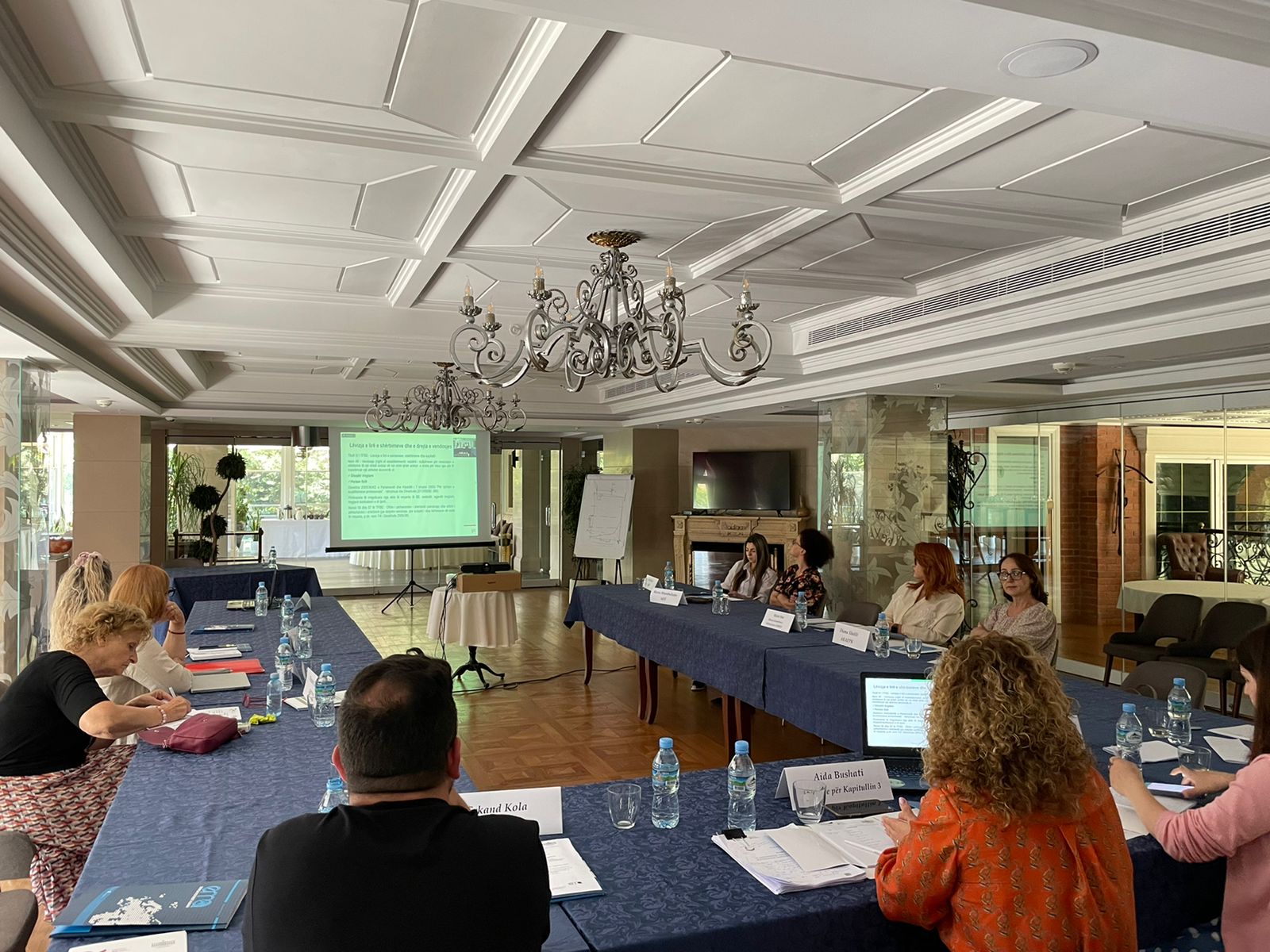 On June 15 2022, a roundtable discussion on “Mutual recognition of professional qualifications – the implications of Directive 2005/36 / EC and the harmonization process” was organized. The event took place under the project SANECA organized by GIZ and the Ministry of Finance and Economy in cooperation with EMA. Part of this roundtable were not only members of PPEI but also representatives from institutions and responsible state authorities, chambers of commerce and industry, representatives from universities and professional orders, as well as experts from civil society.
The event started with a greeting speech from the organizers of the event, Nirvana Deliu (EMA) and expert Erkand Kola from GIZ who gave a brief input on the topic and work of the project. The presentation then went on with Dr. Aida (Gugu) Bushati, expert of Chapter 3, who introduced the Directive 2005/36 – Recognition of the professional qualifications as a starting point, by analyzing data on the number of regulated professions and distribution by different sectors of the economy. In addition, Bushati paid attention to the definitions such as “regulated profession”, “professional qualifications”, “regulated education and training” in order to make the reading of the Directive as clear as possible. Three systems for the recognition of professional qualifications were introduced: The general system of mutual recognition; Automatic recognition based on harmonized minimum training requirements; and Automatic recognition based on professional experience. He then analyzed the specifics of each system taking into account the professions that each of them regulates. Bushati listed the national laws in force regarding the various professions they regulate as well as the legal acts related to the recognition of diplomas. Important during this presentation was the analysis of the approximation of Directive 2005/36 in Albania, the institutions involved and the preparation of the Draft Roadmap which among other things focuses on identifying legal inconsistencies, identifying professions, drafting legal acts and training of structures.
The second part of the discussion was led by Kristina Cuculoska, expert from the region for Chapter 3. Continuing the discussion line, Cuculoska began with a summary of all the information given earlier on the objectives of the Directive and what it covers. She went on to emphasize the importance of creating a digital infrastructure or database by analyzing the content that this system should have and giving examples from the experiences of other countries (Croatia, Slovenia, North Macedonia). Some statistical data related to the ranking of regulated professions (permanent and temporary) were also discussed. Cuculoska shared the experience of North Macedonia regarding the umbrella law on mutual recognition of professional qualifications. She then presented the procedure to be followed for recognition and the institutions involved in this process. The importance of establishing an Inter-Sectoral Group and the competencies of the National Coordinator were underlined. In the end, the register of regulated professions was discussed, which is under the competence of the Ministry of Education and Science.
This roundtable was closed with a series of discussions by the participants who had an interest and requested further analysis by the experts present regarding some of the points of the Directive and how they affect certain groups of professions.
-
 Information and Discussion Roundtable “Combating corruption at the heart of the European Integration Journey: The Perspectives of Youth, Civil Society, and Academia”, 14 October 2026
The European Movement in Albania (EMA), in cooperation with “Aleksandër Moisiu” University of Durrës
Information and Discussion Roundtable “Combating corruption at the heart of the European Integration Journey: The Perspectives of Youth, Civil Society, and Academia”, 14 October 2026
The European Movement in Albania (EMA), in cooperation with “Aleksandër Moisiu” University of Durrës -
 Working Group on Chapter 23 – Digital Services in Albania within the framework of the accession negotiations – DSA Governance, Fundamental Rights, and Institutional Coordination, 30 June 2026
Gledis Gjipali, Executive Director of the European Movement in Albania (EMA), emphasised the importance
Working Group on Chapter 23 – Digital Services in Albania within the framework of the accession negotiations – DSA Governance, Fundamental Rights, and Institutional Coordination, 30 June 2026
Gledis Gjipali, Executive Director of the European Movement in Albania (EMA), emphasised the importance