


NRC 3 Workshop: The European integration process in Albania – opportunities for the involvement of civil society and youth in the negotiations process for social policies, tourism, education, and youth, Burrel, 24 April 2026
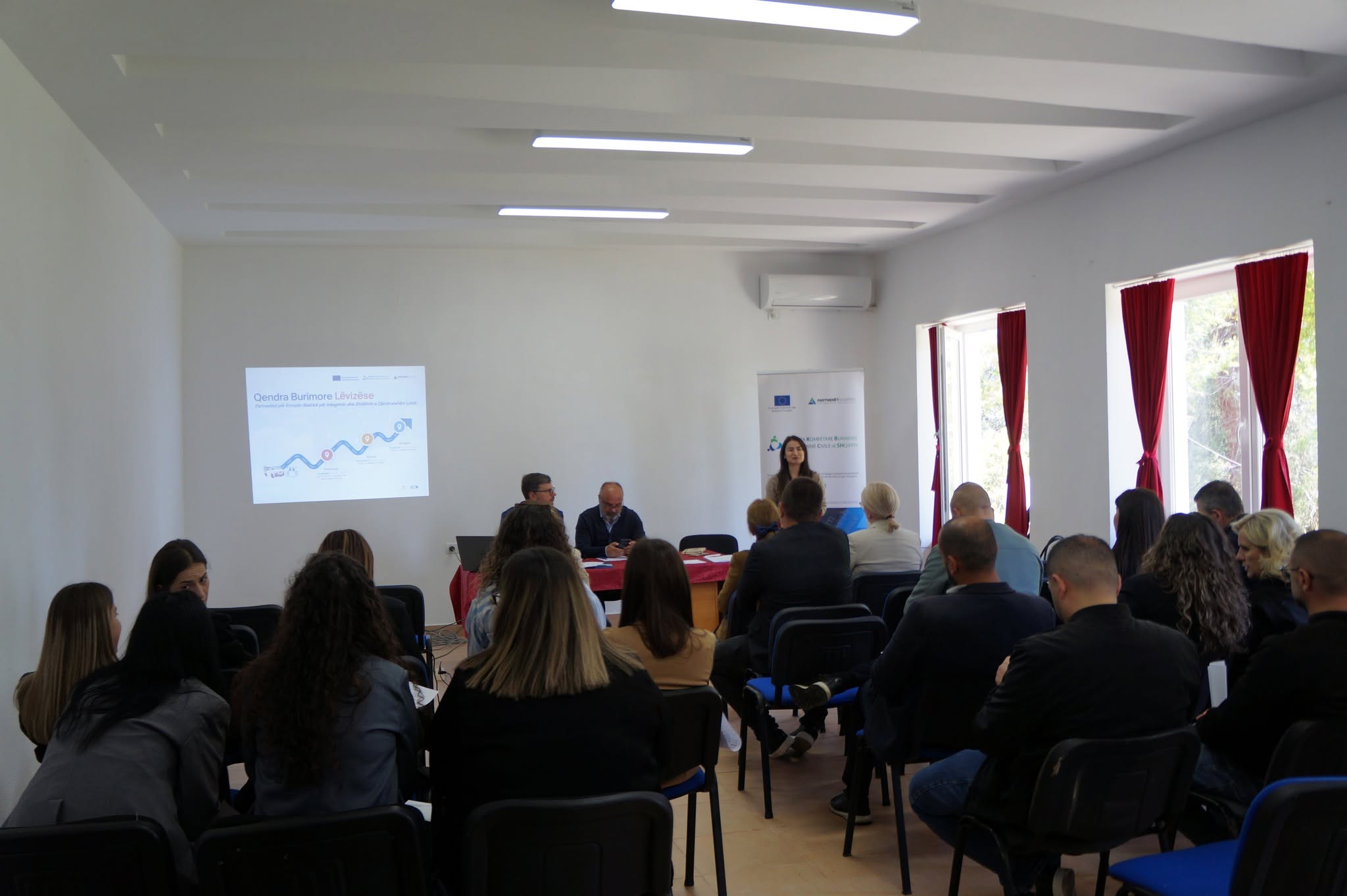 The European Movement in Albania (EMA) and Partners Albania organised a workshop in Burrel on 24 April 2026, as part of the National Resource Centre for Civil Society (NRC), an initiative of Partners Albania for Change and Development supported by the European Union. The event brought together local civil society organisations, representatives of public institutions, activists and young people to discuss Albania’s EU accession negotiations, with a particular focus on food safety and consumer protection, social issues and environment, and to encourage their active involvement in the process.
Xhoana Zeqo, Project Manager at Partners Albania for Change and Development, welcomed participants and introduced the NRC, which aims to promote civic mobilisation and public participation, especially among actors outside Tirana. She underlined that initiatives of this kind help local communities, institutions and civil society take part in discussions and consultation on European integration. In her words, the workshop sought both to make the technical aspects of the negotiations easier to understand and to create room for exchange between local stakeholders.
Gledis Gjipali, Executive Director of the European Movement in Albania, focused on how civil society can be included in the process and on the consultation mechanisms that already exist. He recognised that the negotiations are highly technical and challenging, with many chapters, legal requirements and procedures that are difficult to follow. Even so, he argued that this complexity should not become a reason for civil society to stay on the sidelines. Organisations need to take the initiative: informing themselves, strengthening their capacities, joining consultation processes and presenting well-founded positions that reflect the realities of their communities. He added that a strong, informed civil society makes the process more transparent and more accountable.
Florian Xhafa, Executive Director of the Institute for Policy and Law, provided a closer look at some of chapters of direct relevance to the audience including Chapter 11 – Agriculture and Rural Development, Chapter 12 – Food Safety, Chapter 27 – Environment and Chapter 19 – Social Policy and Employment. He covered the content of each chapter, the legislation involved, and the difficulties Albania faces in meeting EU standards. Xhafa stressed that progress in these areas will depend on investment in infrastructure, skilled staff and stronger institutions, and that it is important to discuss openly how reforms may affect specific sectors and groups.
During the interactive discussion, participants described the main difficulties faced by non-state actors at the local level. Civil society and young people spoke of feeling left out of the process and having few real opportunities to contribute. The discussion underlined the need for accessible information, dialogue spaces and practical opportunities to involve local civil society, young people and other stakeholders in the EU integration process.
***
National Resource Centre for Civil Society in Albania is a platform of information and service provision which contributes to the strengthening of civil society’s capacities to be more effective, transparent, accountable and independent actors and to the creation of an enabling environment for the civil society, participatory democracy and the integration process of Albania into the European Union. The initiative is financed by the European Union, and is implemented by Partners Albania in partnership with the Albanian Center for Population and Development (ACPD) and the European Movement in Albania (EMA).
Find more on: www.resourcecentre.al
-
 NRC 3 Workshop: The European integration process in Albania – opportunities for the involvement of civil society and youth in the negotiations process for social policies, tourism, education, and youth, Divjakë, 6 November 2026
On November 6, 2026, the European Movement in Albania and Partners Albania held the
-
 Information and Discussion Roundtable “Combating corruption at the heart of the European Integration Journey: The Perspectives of Youth, Civil Society, and Academia”, 28 October 2026, Elbasan
The European Movement in Albania (EMA), in cooperation with the Thu’Je Platform – a