


Working Group for Chapter 24 – Promoting scientific research and strengthening university curricula on money laundering and terrorist financing, 23 June 2026
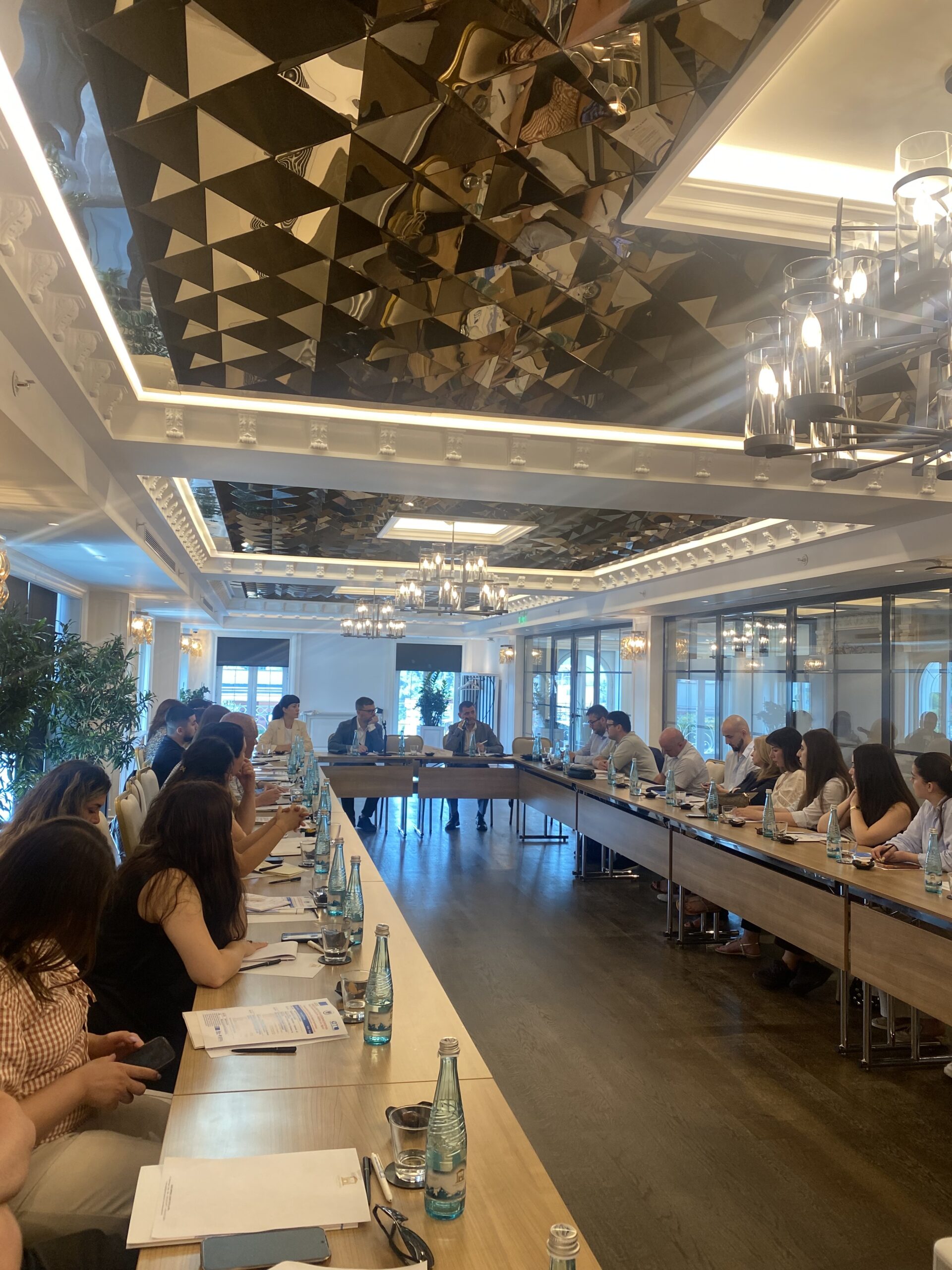 The discussion roundtable organized within the framework of the National Convention on European Integration – Chapter 24 (Justice, Freedom, Security) was dedicated to promoting scientific research and strengthening university curricula in the field of money laundering and terrorist financing. The event brought together representatives of public institutions, academia, civil society organizations, and field experts to discuss the role that higher education, scientific research, and interinstitutional cooperation can play in fulfilling the standards of the European Union in the framework of money laundering and terrorist financing.
In his opening remarks, Gledis Gjipali, Executive Director of the European Movement in Albania (EMA), emphasized that the European integration process requires not only legislative approximation, but also the development of expertise and professional capacities in increasingly complex areas, such as the fight against money laundering and terrorist financing. He underlined the importance of involving academia in the negotiation process, alongside public institutions, the private sector, and civil society, highlighting that it is precisely the cooperation among these stakeholders that creates the opportunity to develop higher-quality policies, more in-depth analyses, and recommendations. Gjipali also drew attention to the role that the National Convention on European Integration has played over the years in creating a sustainable space for dialogue and in drafting concrete recommendations, which are periodically compiled in the Convention’s Book of Recommendations, distributed to the key stakeholders, and whose implementation is subsequently monitored.
Sabiela Seitaj, Head of the Institutional Coordination Sector at the Financial Intelligence Agency (FIA), presented the main developments in the Agency’s work and the challenges related to the negotiation process under Chapter 24. She emphasized that the fight against money laundering cannot rely solely on institutional mechanisms, but requires continuous interinstitutional coordination and a stronger partnership with the private sector, academia, and civil society organizations. In this context, Seitaj highlighted the importance of the Public Education Strategy, which aims not only to raise public awareness but also to create opportunities for professional contributions and expertise from various stakeholders. She also underlined the need to organize joint training sessions and continuous capacity-building programmes, which at the same time serve to strengthen institutional cooperation.
Subsequently, Skerdian Kurti, lecturer at the Faculty of Law, University of Tirana, focused on the importance of addressing money laundering as a complex phenomenon with broad economic, legal, and social consequences. He emphasized that this criminal offence cannot be understood solely from a legal perspective, but requires an interdisciplinary approach that combines knowledge in the fields of law, economics, finance, and technology. According to him, there is a clear lack of empirical studies and academic analyses on issues such as the confiscation of assets of criminal origin, the effectiveness of preventive measures, and their impact on society. He pointed out that universities should play a much more active role in advancing scientific research and supporting public institutions through expertise, studies, and specialized professional training programmes. He also highlighted new developments, such as cryptocurrencies, digital assets, and modern forms of fund transfers, which require the continuous updating of university curricula and the establishment of dedicated programmes for training specialists in this field. Among other points, he noted that one of the main gaps remains the lack of institutionalized cooperation between universities and the responsible institutions. While sporadic forms of cooperation have existed, he considered it necessary to establish sustainable mechanisms for the development of professional internships, joint research projects, scientific conferences, and specialization programmes. Furthermore, he emphasized the importance of expanding academic literature in the Albanian language and creating a community of experts capable of contributing to the process of public policy-making and to European projects in this field.
During the discussion, participants emphasized that cooperation among public institutions, academia, the private sector, and civil society is essential for developing expertise, improving policies, and effectively addressing challenges in the field of money laundering. The event served as a platform for the exchange of knowledge and the identification of opportunities for further cooperation, highlighting the need for continued investment in research, education, and capacity-building as an integral part of Albania’s European integration process, going beyond the mere process of information-sharing and awareness-raising.
*This roundtable took place within the framework of the “Building Partnership on Fundamentals: Empowered CSOs in the EU accession process” project, with the financial support of the European Union – IPA Civil Society Facility 2021, which is implemented by the European Movement in Albania and in cooperation with the Academy of European Integration and Negotiations (AIEN), Slovak Foreign Policy Association (SFPA) and the Center for Transparency and Freedom of Information (CTFI).
-
 Working Group on Chapter 23 – Digital Services in Albania within the framework of the accession negotiations – DSA Governance, Fundamental Rights, and Institutional Coordination, 30 June 2026
Gledis Gjipali, Executive Director of the European Movement in Albania (EMA), emphasised the importance
Working Group on Chapter 23 – Digital Services in Albania within the framework of the accession negotiations – DSA Governance, Fundamental Rights, and Institutional Coordination, 30 June 2026
Gledis Gjipali, Executive Director of the European Movement in Albania (EMA), emphasised the importance -
 Info Session – Access to Justice, Judicial Digitalisation, and Security Policies within Chapters 23 and 24, June 29, 2026
The European Movement in Albania (EMA) organised an info session as part of its
Info Session – Access to Justice, Judicial Digitalisation, and Security Policies within Chapters 23 and 24, June 29, 2026
The European Movement in Albania (EMA) organised an info session as part of its