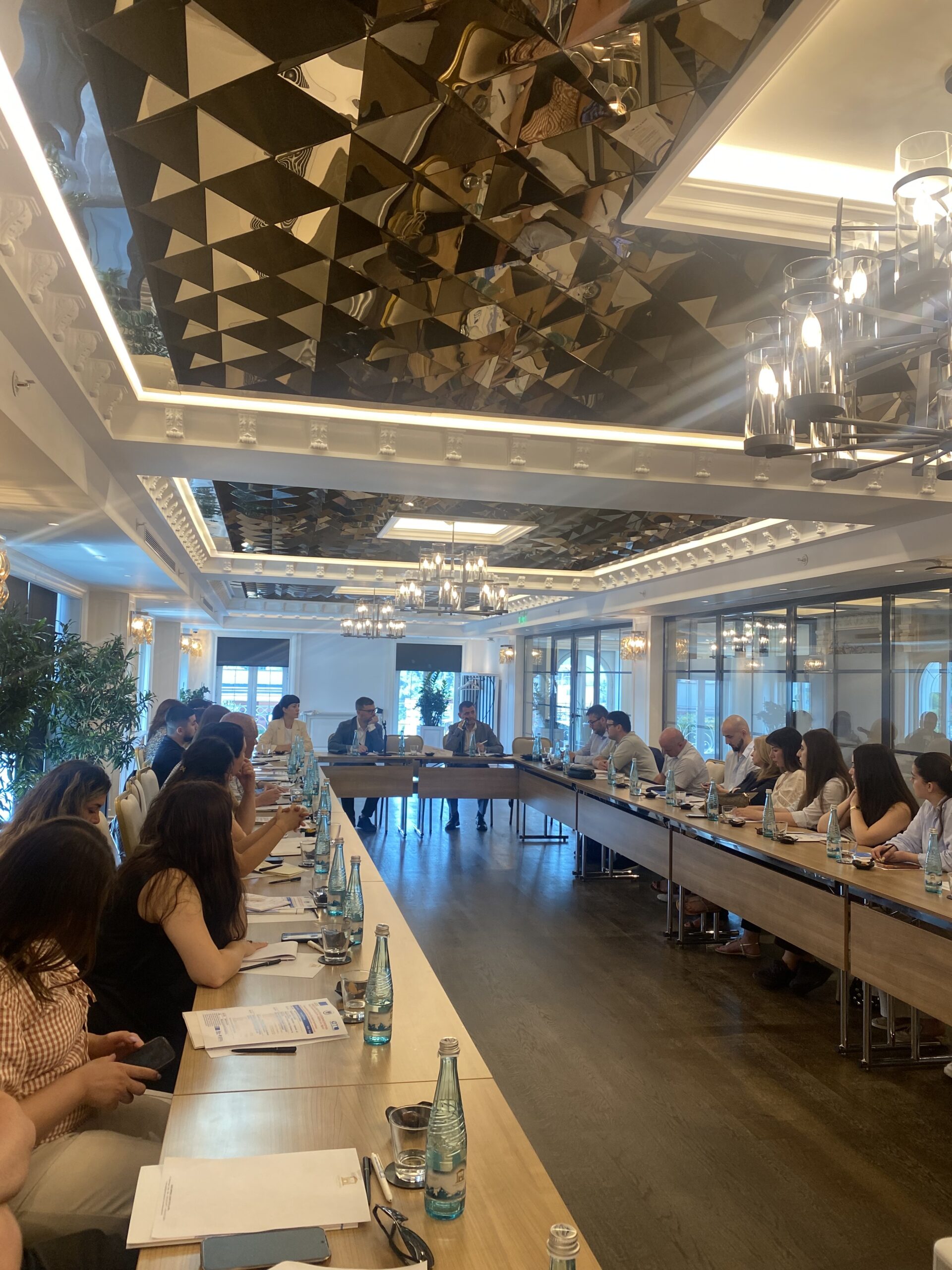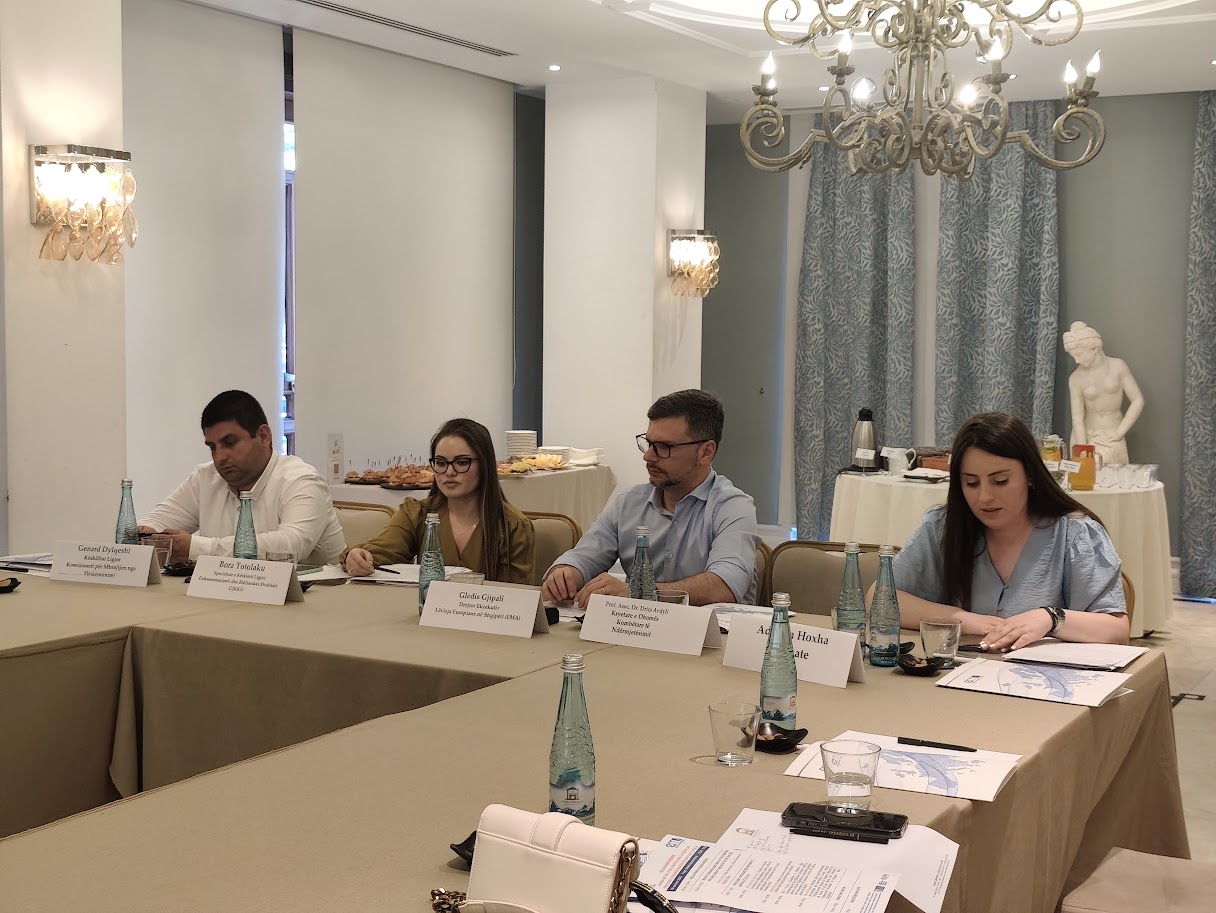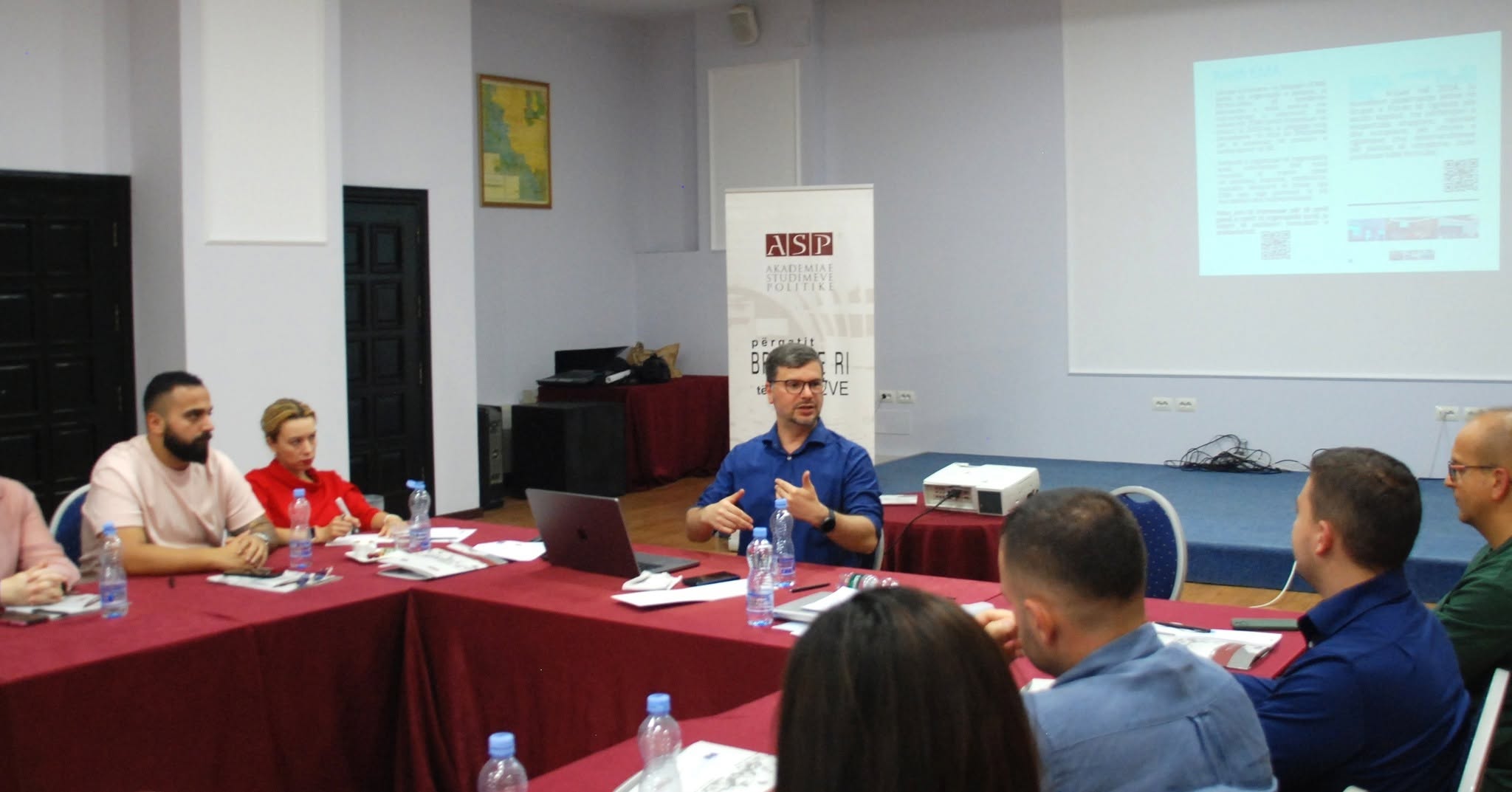
Working Group for Chapter 23 – This discussion roundtable for Chapter 23 – Judiciary and Fundamental Rights, organized by EMA in cooperation with the School of Magistrates, was dedicated to the protection of journalists and the role of justice institutions in ensuring a free and safe environment for the practice of journalism, with a particular focus on Strategic Lawsuits Against Public Participation (SLAPPs). Held on 5 June 2026 within the framework of the National Convention on European Integration, the roundtable brought together representatives of civil society, the media, academia, public administration, and other relevant stakeholders.  In his opening remarks, Gledis Gjipali, Executive Director of the European Movement in Albania (EMA), emphasized the importance of addressing the phenomenon of SLAPP lawsuits in the context of Albania’s EU accession process. He underlined that the absence of a specific legal framework for protection against such lawsuits makes discussions of this kind essential, as they can contribute to the future drafting of relevant legislation. Gjipali noted that the involvement of civil society should be considered fundamental not only during public consultation processes but also in the policy and legislative drafting stages. Given the substantial volume of legal harmonization that Albania must undertake as part of the European integration process, the participation of civil society actors remains particularly important, especially following the inclusion of a dedicated law on protection against SLAPP lawsuits in the Rule of Law Roadmap and the fulfilment of the interim benchmarks for Chapter 23.  Flutura Kusari, expert at the European Centre for Press and Media Freedom and member of the EU Expert Group on SLAPPs, presented the concept of SLAPP lawsuits, explaining the distinction between such lawsuits and legitimate legal proceedings. She stressed that SLAPP lawsuits are intended to suppress public participation and exert pressure on journalists, activists, and other actors engaged in matters of public interest. Kusari highlighted that these lawsuits negatively affect a range of fundamental rights, including freedom of expression, media freedom, and effective access to justice.  During her presentation, she explained the developments that led to the creation of the European anti-SLAPP framework, from the reactions following the murder of investigative journalist Daphne Caruana Galizia to the drafting of the current European instruments. Kusari discussed the key European instruments in this field, including the recommendations of the Council of Europe, the European Commission Recommendation, and Directive (EU) 2024/1069.  She paid particular attention to the indicators that help identify SLAPP lawsuits. She explained that these lawsuits are often characterized by a clear imbalance of power between the claimant and the defendant, with the claimant using financial or political advantages to exert pressure. Among the main indicators, she mentioned partially or entirely unfounded claims, disproportionate requests for damages, abuse of legal procedures, and the use of tactics designed to increase costs and prolong court proceedings. She also stressed that SLAPP lawsuits are frequently accompanied by reputation-management campaigns and public attacks aimed at discrediting journalists and activists, creating a climate of intimidation that extends beyond the courtroom.  Kusari further outlined the different types of SLAPP lawsuits recognized by European instruments, including domestic lawsuits, cross-border lawsuits, multiple or coordinated lawsuits, and those targeting anonymous participation in public debate. She explained that the Council of Europe Recommendation covers all stages of legal action, including initial threats of litigation, whereas the EU Directive focuses on civil proceedings with a cross-border element.  She placed particular emphasis on the early dismissal mechanism, noting that European instruments provide courts and defendants with the possibility to request the termination or dismissal of proceedings where there are clear indications that a case constitutes an abusive lawsuit against public participation. Analyzing the safeguards provided by European instruments, Kusari explained that they include requiring claimants to provide security for procedural costs, enabling defendants to recover full legal expenses, compensating material and non-material damages caused by SLAPP lawsuits, and imposing effective, proportionate, and dissuasive sanctions on claimants who abuse the judicial system.  She also highlighted the importance of legal, financial, and psychological support for victims of such lawsuits, as well as the need to establish transparency mechanisms, including the publication of court decisions and the collection of data on SLAPP cases. In conclusion, she assessed that these European standards provide an important basis for strengthening the protection of freedom of expression and media freedom in the Western Balkans, where domestic SLAPP cases represent the greatest challenge.  Aida Bushati, Full-Time Lecturer at the School of Magistrates, focused on the importance of strengthening the capacities of magistrates in dealing with issues related to media freedom and the protection of journalists. She noted that while the School already provides training, recent years have seen a significant increase in the need to expand training in this area in line with Council of Europe recommendations. These include issues such as SLAPP lawsuits as a means of restricting the work of journalists and activists, as well as broader protection mechanisms.  In this context, topics such as the right to be forgotten, lawsuits against journalists, the protection of information sources, and the way courts communicate with the media are also addressed. Bushati emphasized that these are issues receiving increasing public and media attention, making the interaction between the judiciary and the media a complex and sensitive matter.  She stressed that the phenomenon of SLAPP lawsuits should be addressed comprehensively, taking into account challenges related to online platforms and the digital space. For these reasons, a dedicated conference is being organized for the current generation of magistrate students to address the issue in all its dimensions, from the protection of fundamental rights to criminal and administrative matters, as well as related procedural aspects.  Bushati pointed out that judges and prosecutors are becoming increasingly familiar with these issues through the case law of the European Court of Human Rights and the Court of Justice of the European Union, and that the principles developed by these courts can be directly applied in judicial practice. She also noted that the experience of other countries demonstrates that the harmonization process is neither simple nor uniform.  While a dedicated law could facilitate the regulation of these issues, judges often rely on existing legal codes and tend to be cautious regarding profound procedural changes. In this context, Bushati emphasized that the debate should not be perceived as an approach aimed solely at protecting journalists or any particular group, but rather as an effort to establish a fair balance. In the current climate, where the media and judiciary are often perceived as being in tension with one another, a more balanced and constructive approach is needed. The objective is to strengthen mutual trust and create a more functional relationship, whereby the judiciary can independently and calmly perform its procedural functions, while the media can fulfil its informative role without undue restrictions.  Tedi Dobi, Deputy Minister of Justice, emphasized the need to maintain a balance between protecting freedom of expression and ensuring protection for individuals who may be victims of defamatory statements. He argued that European instruments in this field are relatively new but offer valuable opportunities to learn from the practices and experiences of other European countries.  Dobi placed the discussion on SLAPP lawsuits within the broader debate on media freedom and freedom of expression in Albania, also referring to discussions concerning the complete decriminalization of defamation. In Albania, defamation has been decriminalized and is now addressed through administrative and civil liability mechanisms, with fines reaching up to approximately 10 million Albanian lek in the most serious cases and under aggravating circumstances.  He further informed participants that the responsible institutions are currently analyzing the existing situation and that the objective is to prepare a consolidated draft law within the year that will ensure legal certainty while also being clear and practical to implement. This remains both a task and a challenge, requiring close institutional coordination and a balanced approach between European standards and national realities.  During the open discussion, participants addressed a range of issues related to the judicial handling of SLAPP cases, the need for further training of magistrates, the strengthening of institutional capacities, and the role of civil society in identifying and addressing such cases. Participants also discussed the relationship between SLAPP lawsuits, hate speech, media pluralism, and the protection of democratic space for public participation, 5 June 2026 Working Group for Chapter 23 – This discussion roundtable for Chapter 23 – Judiciary and Fundamental Rights, organized by EMA in cooperation with the School of Magistrates, was dedicated to the protection of journalists and the role of justice institutions in ensuring a free and safe environment for the practice of journalism, with a particular focus on Strategic Lawsuits Against Public Participation (SLAPPs). Held on 5 June 2026 within the framework of the National Convention on European Integration, the roundtable brought together representatives of civil society, the media, academia, public administration, and other relevant stakeholders. In his opening remarks, Gledis Gjipali, Executive Director of the European Movement in Albania (EMA), emphasized the importance of addressing the phenomenon of SLAPP lawsuits in the context of Albania’s EU accession process. He underlined that the absence of a specific legal framework for protection against such lawsuits makes discussions of this kind essential, as they can contribute to the future drafting of relevant legislation. Gjipali noted that the involvement of civil society should be considered fundamental not only during public consultation processes but also in the policy and legislative drafting stages. Given the substantial volume of legal harmonization that Albania must undertake as part of the European integration process, the participation of civil society actors remains particularly important, especially following the inclusion of a dedicated law on protection against SLAPP lawsuits in the Rule of Law Roadmap and the fulfilment of the interim benchmarks for Chapter 23. Flutura Kusari, expert at the European Centre for Press and Media Freedom and member of the EU Expert Group on SLAPPs, presented the concept of SLAPP lawsuits, explaining the distinction between such lawsuits and legitimate legal proceedings. She stressed that SLAPP lawsuits are intended to suppress public participation and exert pressure on journalists, activists, and other actors engaged in matters of public interest. Kusari highlighted that these lawsuits negatively affect a range of fundamental rights, including freedom of expression, media freedom, and effective access to justice. During her presentation, she explained the developments that led to the creation of the European anti-SLAPP framework, from the reactions following the murder of investigative journalist Daphne Caruana Galizia to the drafting of the current European instruments. Kusari discussed the key European instruments in this field, including the recommendations of the Council of Europe, the European Commission Recommendation, and Directive (EU) 2024/1069. She paid particular attention to the indicators that help identify SLAPP lawsuits. She explained that these lawsuits are often characterized by a clear imbalance of power between the claimant and the defendant, with the claimant using financial or political advantages to exert pressure. Among the main indicators, she mentioned partially or entirely unfounded claims, disproportionate requests for damages, abuse of legal procedures, and the use of tactics designed to increase costs and prolong court proceedings. She also stressed that SLAPP lawsuits are frequently accompanied by reputation-management campaigns and public attacks aimed at discrediting journalists and activists, creating a climate of intimidation that extends beyond the courtroom. Kusari further outlined the different types of SLAPP lawsuits recognized by European instruments, including domestic lawsuits, cross-border lawsuits, multiple or coordinated lawsuits, and those targeting anonymous participation in public debate. She explained that the Council of Europe Recommendation covers all stages of legal action, including initial threats of litigation, whereas the EU Directive focuses on civil proceedings with a cross-border element. She placed particular emphasis on the early dismissal mechanism, noting that European instruments provide courts and defendants with the possibility to request the termination or dismissal of proceedings where there are clear indications that a case constitutes an abusive lawsuit against public participation. Analyzing the safeguards provided by European instruments, Kusari explained that they include requiring claimants to provide security for procedural costs, enabling defendants to recover full legal expenses, compensating material and non-material damages caused by SLAPP lawsuits, and imposing effective, proportionate, and dissuasive sanctions on claimants who abuse the judicial system. She also highlighted the importance of legal, financial, and psychological support for victims of such lawsuits, as well as the need to establish transparency mechanisms, including the publication of court decisions and the collection of data on SLAPP cases. In conclusion, she assessed that these European standards provide an important basis for strengthening the protection of freedom of expression and media freedom in the Western Balkans, where domestic SLAPP cases represent the greatest challenge. Aida Bushati, Full-Time Lecturer at the School of Magistrates, focused on the importance of strengthening the capacities of magistrates in dealing with issues related to media freedom and the protection of journalists. She noted that while the School already provides training, recent years have seen a significant increase in the need to expand training in this area in line with Council of Europe recommendations. These include issues such as SLAPP lawsuits as a means of restricting the work of journalists and activists, as well as broader protection mechanisms. In this context, topics such as the right to be forgotten, lawsuits against journalists, the protection of information sources, and the way courts communicate with the media are also addressed. Bushati emphasized that these are issues receiving increasing public and media attention, making the interaction between the judiciary and the media a complex and sensitive matter. She stressed that the phenomenon of SLAPP lawsuits should be addressed comprehensively, taking into account challenges related to online platforms and the digital space. For these reasons, a dedicated conference is being organized for the current generation of magistrate students to address the issue in all its dimensions, from the protection of fundamental rights to criminal and administrative matters, as well as related procedural aspects. Bushati pointed out that judges and prosecutors are becoming increasingly familiar with these issues through the case law of the European Court of Human Rights and the Court of Justice of the European Union, and that the principles developed by these courts can be directly applied in judicial practice. She also noted that the experience of other countries demonstrates that the harmonization process is neither simple nor uniform. While a dedicated law could facilitate the regulation of these issues, judges often rely on existing legal codes and tend to be cautious regarding profound procedural changes. In this context, Bushati emphasized that the debate should not be perceived as an approach aimed solely at protecting journalists or any particular group, but rather as an effort to establish a fair balance. In the current climate, where the media and judiciary are often perceived as being in tension with one another, a more balanced and constructive approach is needed. The objective is to strengthen mutual trust and create a more functional relationship, whereby the judiciary can independently and calmly perform its procedural functions, while the media can fulfil its informative role without undue restrictions. Tedi Dobi, Deputy Minister of Justice, emphasized the need to maintain a balance between protecting freedom of expression and ensuring protection for individuals who may be victims of defamatory statements. He argued that European instruments in this field are relatively new but offer valuable opportunities to learn from the practices and experiences of other European countries. Dobi placed the discussion on SLAPP lawsuits within the broader debate on media freedom and freedom of expression in Albania, also referring to discussions concerning the complete decriminalization of defamation. In Albania, defamation has been decriminalized and is now addressed through administrative and civil liability mechanisms, with fines reaching up to approximately 10 million Albanian lek in the most serious cases and under aggravating circumstances. He further informed participants that the responsible institutions are currently analyzing the existing situation and that the objective is to prepare a consolidated draft law within the year that will ensure legal certainty while also being clear and practical to implement. This remains both a task and a challenge, requiring close institutional coordination and a balanced approach between European standards and national realities. During the open discussion, participants addressed a range of issues related to the judicial handling of SLAPP cases, the need for further training of magistrates, the strengthening of institutional capacities, and the role of civil society in identifying and addressing such cases. Participants also discussed the relationship between SLAPP lawsuits, hate speech, media pluralism, and the protection of democratic space for public participation, 5 June 2026
This discussion roundtable for Chapter 23 – Judiciary and Fundamental Rights, organized by EMA in cooperation with the School of Magistrates, was dedicated to the protection of journalists and the rol ...

Read more

Working Group for Chapter 23 – This discussion roundtable for Chapter 23 – Judiciary and Fundamental Rights, organized by EMA in cooperation with the School of Magistrates, was dedicated to the protection of journalists and the role of justice institutions in ensuring a free and safe environment for the practice of journalism, with a particular focus on Strategic Lawsuits Against Public Participation (SLAPPs). Held on 5 June 2026 within the framework of the National Convention on European Integration, the roundtable brought together representatives of civil society, the media, academia, public administration, and other relevant stakeholders. In his opening remarks, Gledis Gjipali, Executive Director of the European Movement in Albania (EMA), emphasized the importance of addressing the phenomenon of SLAPP lawsuits in the context of Albania’s EU accession process. He underlined that the absence of a specific legal framework for protection against such lawsuits makes discussions of this kind essential, as they can contribute to the future drafting of relevant legislation. Gjipali noted that the involvement of civil society should be considered fundamental not only during public consultation processes but also in the policy and legislative drafting stages. Given the substantial volume of legal harmonization that Albania must undertake as part of the European integration process, the participation of civil society actors remains particularly important, especially following the inclusion of a dedicated law on protection against SLAPP lawsuits in the Rule of Law Roadmap and the fulfilment of the interim benchmarks for Chapter 23. Flutura Kusari, expert at the European Centre for Press and Media Freedom and member of the EU Expert Group on SLAPPs, presented the concept of SLAPP lawsuits, explaining the distinction between such lawsuits and legitimate legal proceedings. She stressed that SLAPP lawsuits are intended to suppress public participation and exert pressure on journalists, activists, and other actors engaged in matters of public interest. Kusari highlighted that these lawsuits negatively affect a range of fundamental rights, including freedom of expression, media freedom, and effective access to justice. During her presentation, she explained the developments that led to the creation of the European anti-SLAPP framework, from the reactions following the murder of investigative journalist Daphne Caruana Galizia to the drafting of the current European instruments. Kusari discussed the key European instruments in this field, including the recommendations of the Council of Europe, the European Commission Recommendation, and Directive (EU) 2024/1069. She paid particular attention to the indicators that help identify SLAPP lawsuits. She explained that these lawsuits are often characterized by a clear imbalance of power between the claimant and the defendant, with the claimant using financial or political advantages to exert pressure. Among the main indicators, she mentioned partially or entirely unfounded claims, disproportionate requests for damages, abuse of legal procedures, and the use of tactics designed to increase costs and prolong court proceedings. She also stressed that SLAPP lawsuits are frequently accompanied by reputation-management campaigns and public attacks aimed at discrediting journalists and activists, creating a climate of intimidation that extends beyond the courtroom. Kusari further outlined the different types of SLAPP lawsuits recognized by European instruments, including domestic lawsuits, cross-border lawsuits, multiple or coordinated lawsuits, and those targeting anonymous participation in public debate. She explained that the Council of Europe Recommendation covers all stages of legal action, including initial threats of litigation, whereas the EU Directive focuses on civil proceedings with a cross-border element. She placed particular emphasis on the early dismissal mechanism, noting that European instruments provide courts and defendants with the possibility to request the termination or dismissal of proceedings where there are clear indications that a case constitutes an abusive lawsuit against public participation. Analyzing the safeguards provided by European instruments, Kusari explained that they include requiring claimants to provide security for procedural costs, enabling defendants to recover full legal expenses, compensating material and non-material damages caused by SLAPP lawsuits, and imposing effective, proportionate, and dissuasive sanctions on claimants who abuse the judicial system. She also highlighted the importance of legal, financial, and psychological support for victims of such lawsuits, as well as the need to establish transparency mechanisms, including the publication of court decisions and the collection of data on SLAPP cases. In conclusion, she assessed that these European standards provide an important basis for strengthening the protection of freedom of expression and media freedom in the Western Balkans, where domestic SLAPP cases represent the greatest challenge. Aida Bushati, Full-Time Lecturer at the School of Magistrates, focused on the importance of strengthening the capacities of magistrates in dealing with issues related to media freedom and the protection of journalists. She noted that while the School already provides training, recent years have seen a significant increase in the need to expand training in this area in line with Council of Europe recommendations. These include issues such as SLAPP lawsuits as a means of restricting the work of journalists and activists, as well as broader protection mechanisms. In this context, topics such as the right to be forgotten, lawsuits against journalists, the protection of information sources, and the way courts communicate with the media are also addressed. Bushati emphasized that these are issues receiving increasing public and media attention, making the interaction between the judiciary and the media a complex and sensitive matter. She stressed that the phenomenon of SLAPP lawsuits should be addressed comprehensively, taking into account challenges related to online platforms and the digital space. For these reasons, a dedicated conference is being organized for the current generation of magistrate students to address the issue in all its dimensions, from the protection of fundamental rights to criminal and administrative matters, as well as related procedural aspects. Bushati pointed out that judges and prosecutors are becoming increasingly familiar with these issues through the case law of the European Court of Human Rights and the Court of Justice of the European Union, and that the principles developed by these courts can be directly applied in judicial practice. She also noted that the experience of other countries demonstrates that the harmonization process is neither simple nor uniform. While a dedicated law could facilitate the regulation of these issues, judges often rely on existing legal codes and tend to be cautious regarding profound procedural changes. In this context, Bushati emphasized that the debate should not be perceived as an approach aimed solely at protecting journalists or any particular group, but rather as an effort to establish a fair balance. In the current climate, where the media and judiciary are often perceived as being in tension with one another, a more balanced and constructive approach is needed. The objective is to strengthen mutual trust and create a more functional relationship, whereby the judiciary can independently and calmly perform its procedural functions, while the media can fulfil its informative role without undue restrictions. Tedi Dobi, Deputy Minister of Justice, emphasized the need to maintain a balance between protecting freedom of expression and ensuring protection for individuals who may be victims of defamatory statements. He argued that European instruments in this field are relatively new but offer valuable opportunities to learn from the practices and experiences of other European countries. Dobi placed the discussion on SLAPP lawsuits within the broader debate on media freedom and freedom of expression in Albania, also referring to discussions concerning the complete decriminalization of defamation. In Albania, defamation has been decriminalized and is now addressed through administrative and civil liability mechanisms, with fines reaching up to approximately 10 million Albanian lek in the most serious cases and under aggravating circumstances. He further informed participants that the responsible institutions are currently analyzing the existing situation and that the objective is to prepare a consolidated draft law within the year that will ensure legal certainty while also being clear and practical to implement. This remains both a task and a challenge, requiring close institutional coordination and a balanced approach between European standards and national realities. During the open discussion, participants addressed a range of issues related to the judicial handling of SLAPP cases, the need for further training of magistrates, the strengthening of institutional capacities, and the role of civil society in identifying and addressing such cases. Participants also discussed the relationship between SLAPP lawsuits, hate speech, media pluralism, and the protection of democratic space for public participation, 5 June 2026
WG for Chapter 24 – Cooperation  Police–Media: Freedom of Speech and  Public Security in the Process of European  Integration, 10 June 2026 WG for Chapter 24 – Cooperation Police–Media: Freedom of Speech and Public Security in the Process of European Integration, 10 June 2026
The Chapter 24 Roundtable – Justice, Freedom and Security, organized in cooperation with the State Police within the framework of the National Convention on European Integration on 10 June 2026, focus ...

Read more

WG for Chapter 24 – Cooperation Police–Media: Freedom of Speech and Public Security in the Process of European Integration, 10 June 2026
Working Group for Chapter 23 – Regulation of Lobbying in Albania: Strengthening Transparency, Implementation Challenges, and Alignment with European Standards, 22 May 2026 Working Group for Chapter 23 – Regulation of Lobbying in Albania: Strengthening Transparency, Implementation Challenges, and Alignment with European Standards, 22 May 2026
On May 22, 2026, the first institutional roundtable on the implementation of Law No. 12/2026 “On Lobbying in the Republic of Albania” was held, organised by the European Movement in Albania (EMA) and ...

Read more

Working Group for Chapter 23 – Regulation of Lobbying in Albania: Strengthening Transparency, Implementation Challenges, and Alignment with European Standards, 22 May 2026
Study Visit “The practical functioning of the Food Safety and Veterinary Institute (ISUV) and its role in ensuring food safety”, 21 April 2026 Study Visit “The practical functioning of the Food Safety and Veterinary Institute (ISUV) and its role in ensuring food safety”, 21 April 2026
The European Movement in Albania (EMA), in cooperation with the Institute of Food Safety and Veterinary (ISUV) and the ALERT Center organised a study visit to the ISUV premises with the aim of ...

Read more

Study Visit “The practical functioning of the Food Safety and Veterinary Institute (ISUV) and its role in ensuring food safety”, 21 April 2026
Working Group for Chapter 12 – Strengthening the Regulatory Framework for Official Controls and the Categorisation of Entities in Albania within the Framework of the Negotiation Process, 28 April 2026 Working Group for Chapter 12 – Strengthening the Regulatory Framework for Official Controls and the Categorisation of Entities in Albania within the Framework of the Negotiation Process, 28 April 2026
The roundtable for Chapter 12 – Food Safety, Veterinary and Phytosanitary Polices focused primarily on the discussion of the draft law on official controls, the categorisation of entities in meeting E ...

Read more

Working Group for Chapter 12 – Strengthening the Regulatory Framework for Official Controls and the Categorisation of Entities in Albania within the Framework of the Negotiation Process, 28 April 2026